
Forklift abuse: which pallets survive a mine site

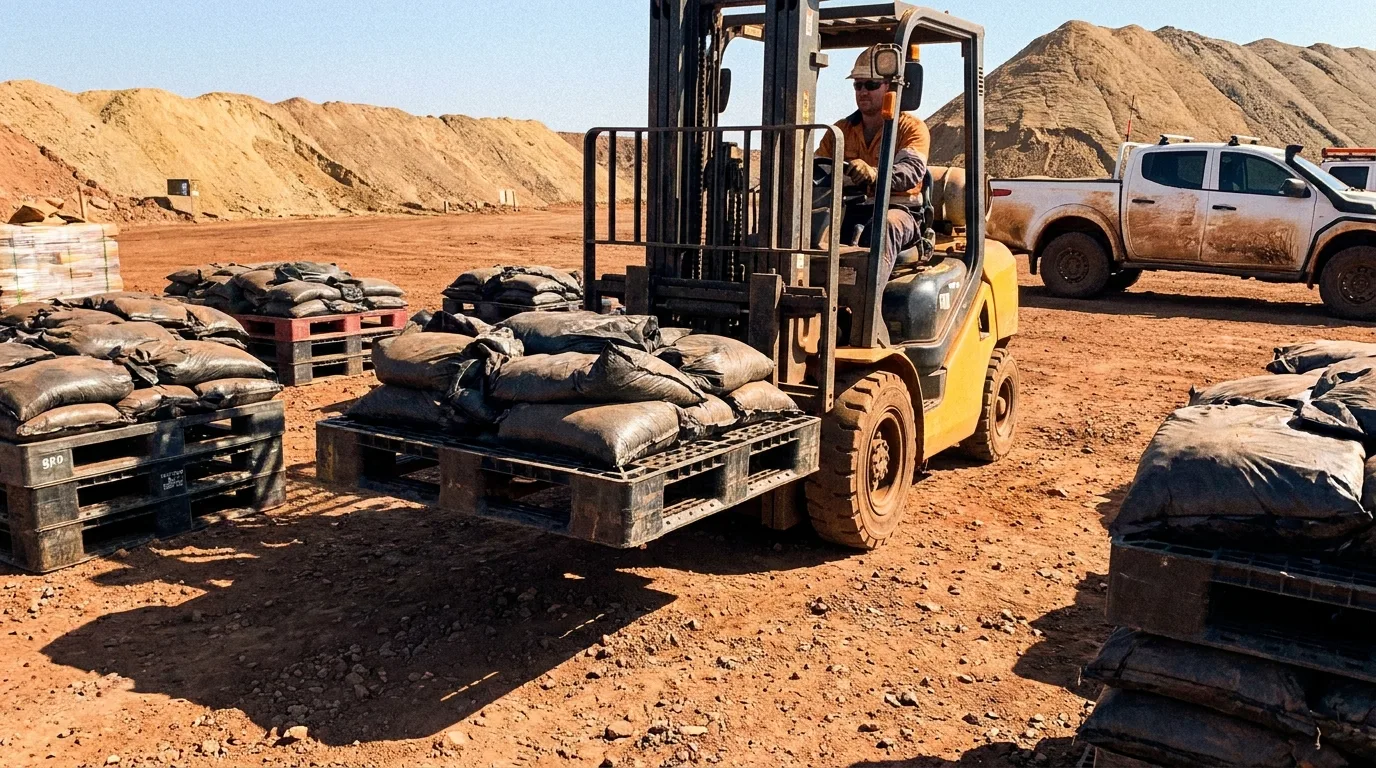
The pallet that survives a mine site is the one built for impact and point loads, not the one with the flattering static number on the spec sheet. What actually kills a pallet on a hardstand or in a laydown yard is the tine strike, the drop onto rough ground, and dense material concentrated on a small patch of deck. This is a technical comparison of how plastic pallets fail under forklift abuse, how the ISO 8611 test methods let you compare toughness for real, and how to spec a deck that lasts.
Which pallet actually survives a mine site?
For rough, heavy mine handling, the pallet that lasts is a one-piece, heavy-duty HDPE pallet with a full-perimeter base or reinforced runners and a genuine impact rating. That is a different question from which pallet holds the most weight standing still. A site pallet spends its life being driven at by a forklift, dropped, dragged, over-loaded and left in the sun, so the properties that matter are how it takes a strike, how its runners resist being torn, and how it behaves when the load is concentrated rather than spread. A cheap pallet can share a headline static figure with a good one and still crack in a season.
This matters beyond the cost of the pallet. Forklift work is one of the higher-consequence tasks on any site: Safe Work Australia's traumatic injury data attributed 15% of work-related fatalities in 2019 to incidents involving cranes and forklifts, above the 11% average across the previous five years (safeworkaustralia.gov.au). A pallet that fails mid-lift, dropping or destabilising a load, is a safety event, not just a maintenance line item. Durability and safety are the same conversation here.
How do plastic pallets fail under forklift abuse?
Pallets on a mine site fail in a handful of repeatable ways, and none of them are the failure the static rating protects against. The common ones are impact fracture (a tine or another pallet strikes the body and cracks it), runner shear (the feet or runners tear away when the pallet is dragged or lifted off-square), deck deflection and cracking under point loads (dense material concentrated on a small area), and embrittlement (UV and cold slowly rob a low-grade plastic of its impact resistance until a routine knock breaks it).
Notice that every one of these is about resilience or construction, not about maximum static weight. A pallet sitting still on a smooth floor almost never fails. It fails in motion, under a strike, or under a concentrated load, which is exactly the environment a mine site guarantees. That is why the spec conversation has to move off the headline number and onto how the pallet is built.
What is a tine strike and why does it break pallets?
A tine strike is when a forklift's fork drives into the pallet body instead of cleanly into the fork entry, and it is the single most common way a cheap pallet dies. It happens on uneven ground, in poor light, with a rushed operator or a load that hides the entries, all routine on a working site. The tine hits a wall, a runner or the underside of the deck with the full push of the truck behind it, and concentrates that force on a small point.
"I have watched a brand-new bargain pallet explode on the first tine strike because there was nothing in the plastic to absorb it. A proper heavy-duty deck takes the same hit, wears a scuff, and keeps working. On a rough site you are not buying load rating, you are buying the ability to survive being hit."
John Meir, Sales Leader, 20+ years in plastic handling
The defence against a tine strike is material and geometry: a resilient, heavier-gauge HDPE structure that flexes and absorbs energy rather than a rigid, thin, brittle one that fractures, plus runners and a base built to take a knock from the side. This is also where a full-perimeter base earns its place over spindly feet, there is simply more structure in the path of the strike. For the load-rating side of the same decision, our guide to pallet load ratings: static vs dynamic vs racking works through what each number does and does not promise.
Which deck and runner construction survives?
Construction is where two pallets with the same static rating separate. The features that survive rough mine handling are a one-piece moulded body (no fasteners to work loose or shear), a full-perimeter base or three heavy skids (more structure to spread and absorb loads and strikes), reinforced runners, and enough wall thickness and rib structure to carry a point load without the deck cracking. Where the deck also has to grip a heavy, vibrating load, an anti-slip top keeps the load from walking. The table below compares two genuinely heavy-duty options against what each construction feature buys you.
| Heavy-duty pallet | Static (kg) | Dynamic (kg) | Racking (kg) | Base / build for abuse |
|---|---|---|---|---|
| AU std 1165×1165, recycled HDPE | 10,000 | 2,000 | 2,000 | Full-perimeter base, anti-slip top; highest rack figure, best all-round site deck |
| ISO 1200×1000, HDPE | 8,000 | 2,000 | 1,000 | Cruciform full-perimeter base, 4-way entry; export footprint, rack to the lower figure |
The takeaway is that both share a 2,000 kg dynamic figure but differ 2x on the racking number, and it is the base construction and footprint, not the static headline, that drive where each one belongs. Match the construction to how the pallet is handled and where it is stored, not to the largest number on the sheet.
How do ISO 8611 tests let you compare toughness?
ISO 8611 is the international test standard for flat pallets, and it is the honest way to compare durability instead of trusting words like heavy-duty or industrial. It sets standard procedures for bending tests, impact tests and durability testing, so a pallet's quoted ratings mean something measured and repeatable rather than a supplier's opinion. When you ask for load figures, ask what they were derived under, ratings backed by ISO 8611 testing let you line two pallets up on the same basis.
For anything that goes into a rack, layer the Australian racking standard on top: AS 4084:2023 (Steel storage racking) governs how racks are designed and loaded to stay stable, and Safe Work Australia treats over-loaded and damaged racking as a serious hazard (safeworkaustralia.gov.au). Confirm the pallet's racking figure at your actual beam span, and if you are unsure which standard governs which part of your store, AS 1940 vs AS 3780 vs AS 4084: which applies? untangles it.
Does overloading crack a pallet?
Yes, and dense mine material makes it easy to do without realising. Every rating assumes a uniform load, weight spread evenly across the deck. Ore samples, drill core, reagent kegs and drums do the opposite: they concentrate mass on small zones, so a pallet comfortably inside its static figure for a spread load can deflect, creep or crack under a few heavy items sitting over the wrong spots. In heat, this is worse, because sustained load plus temperature accelerates creep (slow permanent deflection).
The practical rules are to treat the rated figure as a ceiling not a target, add steel pallet-support bars under point loads in racking, keep dense loads centred and spread, and de-rate for heat on a hot northern site. The broader case for plastic over timber on exactly these dense, point-loaded mining tasks, including biosecurity and hygiene, is in plastic vs timber pallets for mining.
How do I spec a pallet for rough mine handling?
Spec to four things, impact resistance, base and runner construction, point-load behaviour and the racking figure under AS 4084:2023, then add the site multipliers of heat, UV and freight. Start from how the pallet is really handled: if it takes tine strikes and drops, prioritise a resilient one-piece HDPE body with a full-perimeter base over a higher static number on a flimsier build. Confirm the racking rating at your beam span, not the static headline, and where material is dense and concentrated, keep well under the rating and support the deck.
Then match the format to the job. For reagent drums and chemical kegs, pair a heavy-duty rackable pallet with proper containment, the duties sit under AS 1940 and the practice is in mine-site spill containment. Compare decks across the full plastic pallet range, browse the wider mining range, or send your load mass, load profile and freight postcode for a spec-backed quote matched to how your site actually handles pallets.
Common questions
What is the toughest plastic pallet for a mine site?
The toughest pallet for heavy mine handling is a one-piece, heavy-duty HDPE pallet with a full-perimeter base or reinforced runners and a high impact rating, not simply the one with the largest static number. Static load only tells you what the pallet holds sitting still. On a mine site the pallet has to survive tine strikes, being dropped, dragged on rough ground and point-loaded with dense material, so impact resistance and runner construction are what decide whether it lasts a decade or cracks in a season.
Why do cheap plastic pallets crack on forklift work?
Because thin-walled, brittle pallets have little to absorb an impact. When a fork tine misses the entry and strikes the pallet body, or the pallet is dropped onto rough ground under load, a rigid low-grade plastic has nowhere for that energy to go and it fractures. A heavier-gauge pallet with a resilient HDPE structure and reinforced runners flexes and absorbs the strike instead of shattering, which is why the up-front saving on a cheap pallet is usually spent several times over on replacements.
How can I compare pallet durability objectively?
Use the ISO 8611 test methods. ISO 8611 (Pallets for materials handling, flat pallets) sets standard procedures for bending, impact and durability testing, so you can compare pallets on measured performance rather than on adjectives like heavy-duty or industrial. Ask a supplier for the load ratings derived under ISO 8611 and, for anything that goes in a rack, confirm the racking figure at your beam span under AS 4084:2023.
Does over-loading damage a plastic pallet?
Yes, especially with dense, point-loaded material. Every published rating assumes the load is spread evenly, but ore samples, drums and reagent kegs concentrate weight on small areas of the deck. A pallet rated well within its static figure for a uniform load can still deflect or crack under a few heavy items over the wrong spots, and over-racking is a recognised cause of racking collapse. Treat the rated figure as a ceiling and stay under it where loads are concentrated.
Sources: work-related fatalities involving cranes and forklifts, Safe Work Australia traumatic injury fatalities data (safeworkaustralia.gov.au); pallet racking hazard guidance, Safe Work Australia (safeworkaustralia.gov.au); flat pallet bending, impact and durability test methods, ISO 8611 (Pallets for materials handling, flat pallets); steel storage racking design and loading, AS 4084:2023 (Standards Australia); flammable and combustible liquids storage duties, AS 1940. Load figures are manufacturer-tested ratings for the specific pallet models referenced and vary with load distribution, beam span and temperature. Not a quote.