
A lightweight folding Euro container with lid replaces cardboard on a light-assembly loop
A Melbourne light-assembly automotive supplier on Euro pallets.

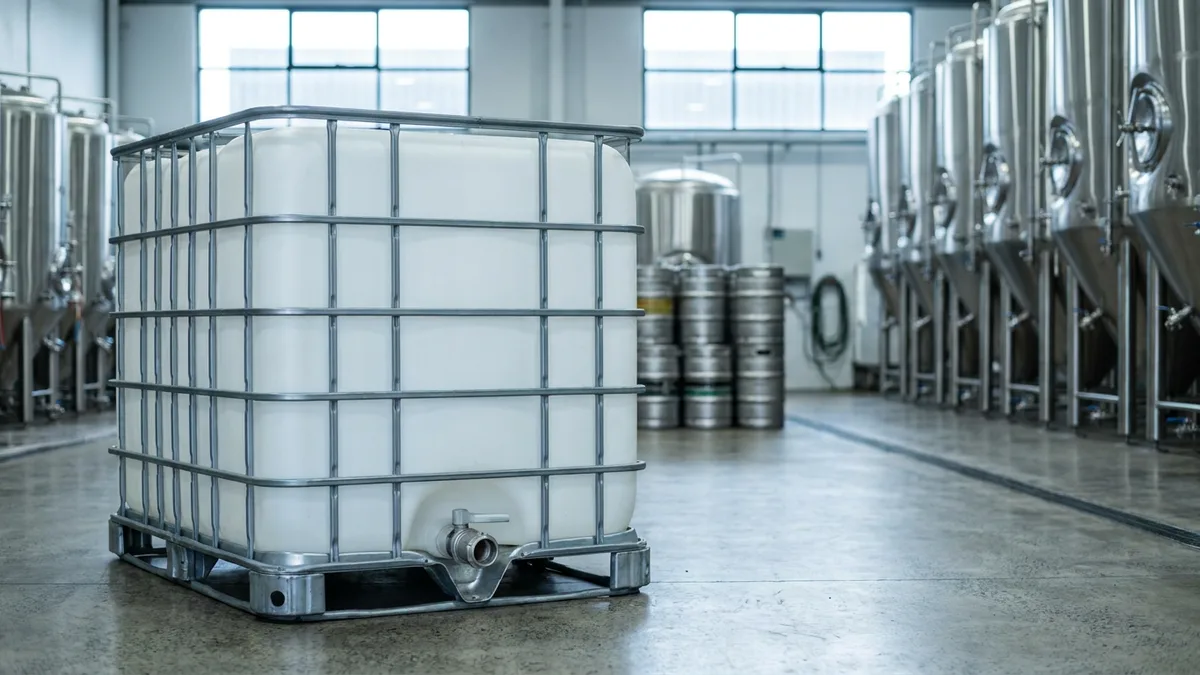
The operator and the problem
A Melbourne light-assembly automotive supplier moving bulky but low-density parts kept reaching for either disposable cardboard or a heavy steel IBC, and neither fit. The cardboard collapsed under repeated handling and went one-way to waste; the steel container was overkill for parts that weighed almost nothing but took up volume, and it was a strain to manoeuvre by hand at the assembly cells. They wanted a returnable that matched the weight of the goods, not the worst case, and that would not chew up the cell operators' time or backs every time it was moved.
Why this container
They chose the BPB-V120810-18, a lightweight folding solid Euro bulk container supplied with a lid, on the 1200 x 800 mm footprint at 1000 mm high for 700 L of usable volume across a 1160 x 760 x 790 mm internal cavity. The figures that suited them: a 1,000 kg static rating and 500 kg dynamic rating, which is ample for voluminous light parts, paired with a 25 kg empty weight that lets a single operator erect, move and fold the unit without mechanical help. It runs on a 9-feet base with 4-way forklift entry for the times it does go on the truck, and the matching lid keeps parts covered and clean in transit. Critically it collapses to a 240 mm folded height, the flattest profile in the bulk-container range, which is what makes the empty return so efficient.
The rollout
Set up as a closed loop between the supplier and the assembly line, the container did exactly what a light-goods returnable should: erected at the pack point, lidded for transit, then knocked down to its 240 mm flat for the trip back, so empties stack roughly four-to-one against a rigid box of the same cube. The light tare meant the cells could handle the boxes manually within their normal flow, and the lid removed the stretch-wrap step that the old open cartons had needed. Operators reported the fold-and-stack of empties was quick enough that it never bottlenecked the line, which had been a real worry with the bulkier steel units.
Why a light returnable fit
The mistake many light-assembly operations make is using a container rated for dense loads to carry feathery, voluminous parts, then paying for that mass on every freight leg and in every manual lift. Matching a 25 kg PP shell to low-density goods keeps the freight weight component down, keeps manual handling within comfortable limits, and still gives a lidded, stackable, reusable box that protects the parts far better than cardboard. The Euro footprint also drops straight onto the supplier's existing pallet and rack system.
Estimated result
For a closed loop of light goods we estimate the lightweight reusable pays back against recurring cardboard within roughly a year, then saves on every return cycle thereafter. The roughly four-to-one collapsed-return ratio means the empty leg carries a fraction of the volume a rigid box would, which we estimate trims empty-return freight by an estimated 70%, and the low 25 kg tare keeps the weight component of freight down on every loaded trip as well. As always these are planning estimates tied to cycle count and lane rather than a quoted saving, but matching the container to low-density parts removed both the disposal cost and the manual-handling strain in one change.