
A South Australian meat processor cuts return-leg freight with a 750 L folding solid pallet box
A South Australian meat processor moving boxed product between plant, cold store and DC..

The operator and the problem
A mid-sized meat processor in regional South Australia runs a steady flow of boxed product between its kill floor, an off-site cold store and a metro distribution centre. The handling unit doing most of the work was a rigid bulk bin that never changed size whether it was full or empty. Outbound, the bins moved product fine. The problem was the return leg: empties came back at full cube, so trucks that should have carried 40-plus pooled units brought home a fraction of that, and the yard filled with rigid boxes that each ate a full pallet footprint of floor space. For a plant already tight on chiller and dock area, paying to freight and store air was the line the operations manager wanted gone.
Why this container
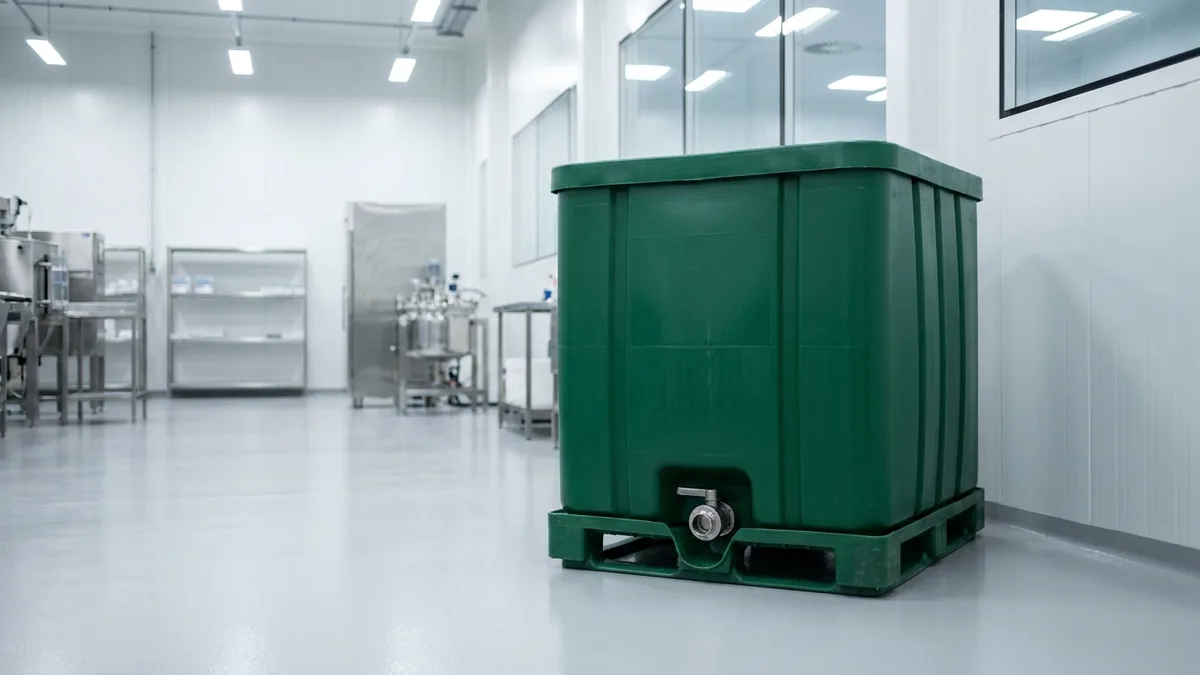
The fit came down to one number doing two jobs. Erected, the box stands 780 mm tall on a 1162 x 1162 mm Australian Standard footprint, with a usable internal 1090 x 1080 x 635 mm giving 750 L of capacity. Folded, it drops to just 280 mm. That is close to a 2.8-to-1 collapse, so roughly three empties stack back into the height of one erected bin on the return run. The walls are solid HDPE rather than vented, which the plant wanted for boxed and bagged product where contained, wipe-down surfaces matter more than airflow, and the matching lid keeps loads covered through the cold chain. A 3000 kg static rating lets the operator block-stack erected, loaded units in the cold store, while the 500 kg dynamic rating comfortably carries their filled box weight under a forklift. At 48 kg empty with 2-way entry on two skids, it is a unit the dock crew can cycle quickly.
The rollout
The operator started inside the supplier's minimum order quantity of 8 and ran a single closed loop on the busiest lane, plant to metro DC and back, before committing wider. The trial answered the only question that mattered: did folded returns actually recover the truck space the maths promised. They did. With empties knocked down to 280 mm and banded in stacks, the return leg went from carting full-cube boxes to moving them flat, and the yard cleared because folded units parked against a wall instead of sprawling across pallet positions. Once the loop proved out, the operator scaled the fleet in further MOQ-sized lots and folded the solid box into standard receiving and dispatch.
Industry fit
This is squarely a food-distribution and meat-processing unit, and the same listed strengths read across to supermarket DCs and third-party logistics operators running the 1165 Australian Standard format. Solid HDPE walls suit boxed protein, bagged components and anything you would rather keep enclosed and easy to sanitise. The lid supports stacked, covered handling through chilled transfers, and the 1162 x 1162 mm footprint drops straight onto standard racking and trailer plans without re-cubing the load. For any operator whose pain is empty-return cube and floor space rather than ventilation, the folding solid box is the natural pick over a rigid bin.
Estimated result
On a return-heavy lane, recovering close to two-thirds of empty-leg cube is the headline. If empties previously came back at the full 780 mm height and now fold to 280 mm, the operator can plan on roughly two to three folded units travelling in the space one rigid empty used to occupy, which typically thins return trips into the order of a third of their former count on that lane. Add the reclaimed yard and chiller floor from parking folded rather than full-cube stock, and on a steady boxed-product loop a fleet of these usually pays back within about a year against the freight and space it removes. These are planning estimates only and will move with the operator's own throughput, stacking heights and freight lanes; the honest numbers come from running one closed loop, as this operator did, and measuring the recovered cube before scaling.