
How a Lockyer Valley packhouse swapped splintering timber pallet boxes for a sealed, folding HDPE bin
A Lockyer Valley vegetable packhouse.

The operator
This is the story of a mid-sized vegetable packhouse in Queensland's Lockyer Valley — one of the densest fresh-produce growing regions in the country. The operation washes, grades and packs mixed vegetable lines for domestic supermarket programs, running product through a wash line and into chilled storage before dispatch. Like a lot of packers in the district, it had built its handling around timber pallet boxes accumulated over many seasons.
The problem with the old handling
Timber and a wet, food-grade environment are an uneasy match. The packhouse's timber bins absorbed wash water, stayed damp in the coolroom, and over time began to splinter at the corners and along the top rails. Splinters near exposed produce are a food-safety problem, not just a nuisance, and the bins were failing periodic swab tests for bacterial load — porous, water-logged timber is very hard to sanitise to audit standard. On top of that, the boxes were bulky to store out of season, eating shed space that the business would rather have used for product.
Why this product
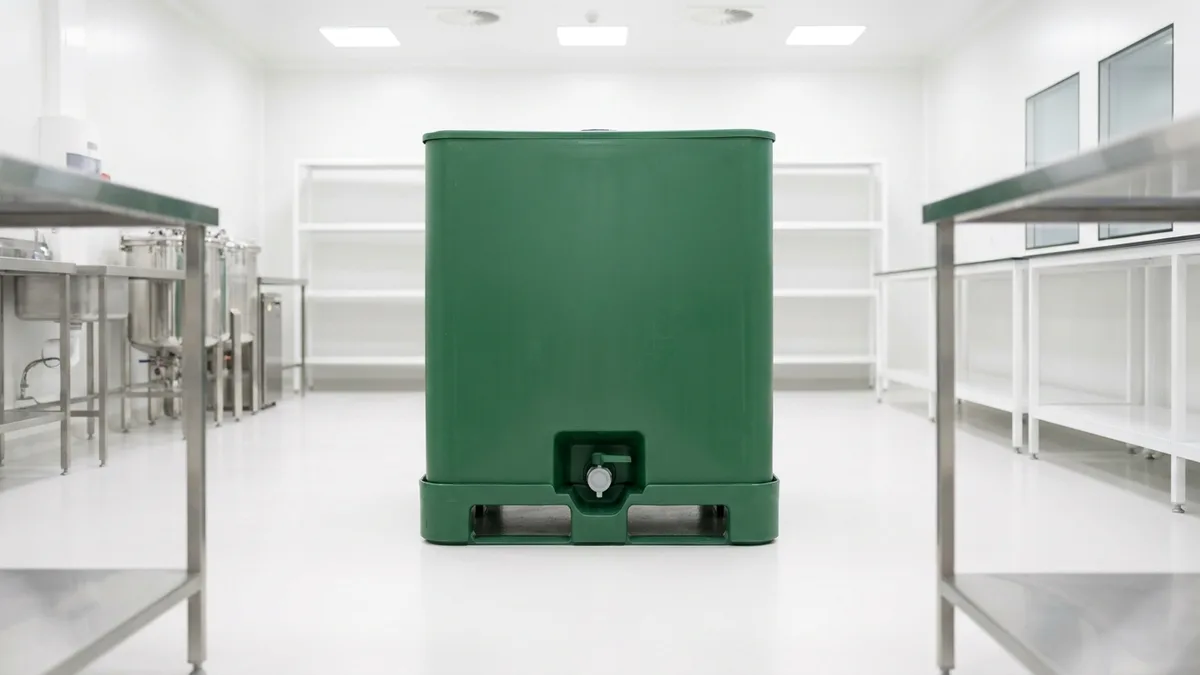
They standardised on the BPB-K1165S Folding Solid Pallet Box: a solid-walled, Australian-Standard bulk container measuring 1162 × 1162 × 780 mm externally, moulded from food-grade HDPE. The solid walls suited their covered, non-vented lines — product that needed to be contained rather than ventilated — and the smooth plastic surface hoses down and sanitises cleanly between runs, with none of the crevices or absorbency that let the timber harbour bacteria. With a 750 L body and a 3000 kg static rating, the box carried their loads comfortably, and the 2-skid base accepted their existing forklift and pallet-jack handling.
The feature that sealed the decision was the folding design. Erected, the box stands 780 mm tall; collapsed, it drops to a folded height of just 280 mm. That roughly four-to-one collapse ratio meant the off-season storage problem largely went away, and any empties moved between sites travelled at about a quarter of the footprint of a rigid box.
How the rollout went
Because the K1165S shares the standard 1165 footprint, it dropped straight into the packhouse's existing racking, transport and pallet patterns — no re-engineering of the wash line or the coolroom was needed. The unit's MOQ of 9 let them start with a modest batch on their highest-turnover line, prove the wash-and-sanitise cycle against their audit requirements, then expand. Pickers found the 48 kg empty weight manageable, and the folding action became routine within a shift or two.
The estimated result
The headline gain is durability and compliance. Timber produce boxes in a daily wash environment are typically condemned and replaced every two to three seasons; food-grade HDPE of this construction routinely lasts a decade or more. On that basis we estimate the packhouse will cut its box replacement spend by an estimated 50–70% over a ten-year horizon, before counting the value of avoided audit non-conformances and the rejected-load risk that splintering timber carried. The folding profile adds a separate saving: collapsing empties to 280 mm cut the volume of out-of-season storage and any inter-site empty freight by roughly 75% versus shipping rigid boxes. None of these figures are a price quote — they are planning estimates based on the product's specifications and typical timber replacement cycles — but for a packer fighting both hygiene swabs and shed space, the sealed, collapsible HDPE bin addressed two problems with one unit.