
A Victorian beverage co-packer ends single-trip IBC disposal with a 1,000 L folding bag-in-box shell
A regional Victorian beverage co-packer running non-hazardous concentrate.

The operator and the problem
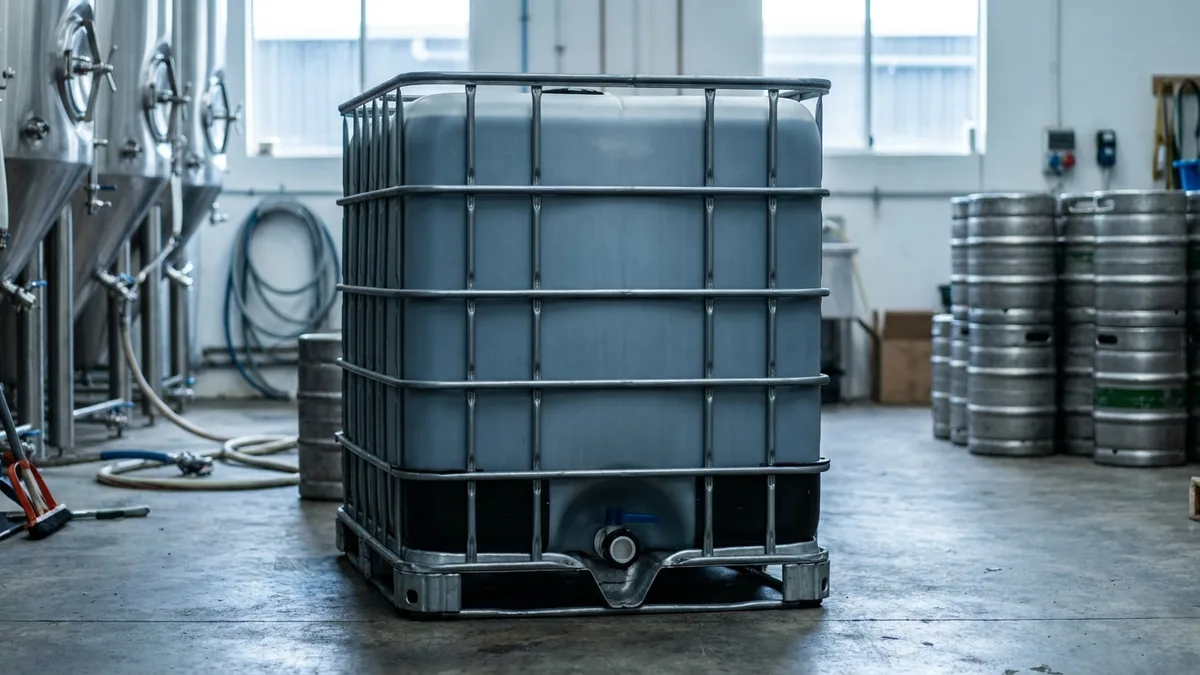
A regional Victorian beverage co-packer was filling non-hazardous fruit concentrate into one-way caged steel IBCs. The steel cages arrived full of liner, got drained over a production run, and then became a disposal headache: every emptied cage had to be either decontaminated and on-sold or paid for at a scrap and waste handler. With concentrate moving in 1,000 L lots through a seasonal peak, the recurring container spend and the yard full of single-trip cages had quietly become one of the larger non-ingredient costs on the line. Worse, the steel was heavy to handle, slow to reposition on the fill dock, and a hygiene risk if any cage came back with residue, which in a food plant is never acceptable.
Why this container
They moved to the BPB-H1111FS folding solid bulk container, an 1100 x 1100 x 1139 mm intermediate bulk container moulded in polypropylene with a 1,000 L working volume and a 1024 x 1024 x 985 mm internal cavity. The numbers that mattered to them: a 7,500 kg static load rating so full units stack safely in the warehouse, a 1,500 kg dynamic rating so a loaded box moves on the forklift without flexing, and genuine 4-way entry on a cruciform full-perimeter base for fast handling on a busy fill dock. The solid PP walls suit a bag-in-box liner, so the concentrate never touches the shell and the box itself stays clean and food-safe for the next cycle. At 95 kg empty it is a substantial unit, but it is engineered to be run as a returnable asset rather than thrown away, and PP tolerates the wash-down and temperature swings a food line puts it through.
The rollout
The decisive feature was the fold. The H1111FS collapses to a 420 mm folded height, so when the bag-in-box liner is spent the operator knocks the walls down and four collapsed units occupy roughly the floor and trailer space that a single rigid 1,000 L IBC needs erect. That turned the empty-return leg from a volume problem into a non-issue: a closed loop was set up with the concentrate's destination so the flat-packed shells ride back stacked, get re-erected, re-lined and refilled. The first season was run as a managed pool, tracking how many fill-empty-return cycles each shell completed before any wall or hinge wear showed, and the team built a simple swap-and-inspect step into the receiving routine so any unit needing attention was pulled before it went back under product.
Industry fit
Bag-in-box on a folding PP shell is a well-proven format for beverage, brewery, food-distribution and pharmaceutical liquids precisely because it separates the hygienic single-use liner from the durable reusable container. For a co-packer juggling several customers and concentrates, one standard 1,000 L shell that folds flat between jobs simplifies buying, storage and the return logistics all at once, and the food-grade PP keeps it compliant across product changes.
Estimated result
Because four folded shells travel in the cube of one rigid IBC, we estimate the return-leg freight on empties dropped by roughly 60-70% against shipping rigid containers back. More significantly, switching from a one-way steel cage to a reusable shell removes most of the per-run container purchase and the matching disposal cost across a season; on a steady concentrate line a reusable IBC of this class typically pays back against recurring single-trip spend within roughly a year and then keeps saving on every cycle. These figures are planning estimates rather than a quoted saving, since the real number depends on lane length, cycle count and how disciplined the return loop stays, but the direction is clear: fewer containers bought, far less empty air freighted, and a yard no longer filling with scrap cages.