
How a central-Queensland mine cleared biosecurity and saved airfreight payload with an ultralight nestable ISO export pallet
A central-Queensland mining operation.

The operator
This is a mining operation in central Queensland that periodically sends small, high-value instrument and equipment shipments overseas — calibration gear, sensors and precision components going to suppliers and labs offshore. The consignments are intermittent but time-sensitive, and because they often move by air and cross international borders, two things dominate their packing decision: chargeable weight, and clearing biosecurity without a hold. They came to us for the lightest export pallet that would also pass quarantine cleanly.
The problem with the old handling
Instrument shipments were going out on timber export pallets, which created two recurring headaches. Timber is heavy, so on an airfreight leg the pallet tare was quietly consuming chargeable payload on every consignment. And timber attracts biosecurity attention: untreated or improperly certified timber packaging is exactly what destination quarantine flags, so the operation faced the ISPM-15 heat-treatment, certification and re-inspection cycle — cost and lead time — on shipments that were already on the clock. A flagged consignment at the border is the worst outcome for a time-critical instrument dispatch.
Why this product
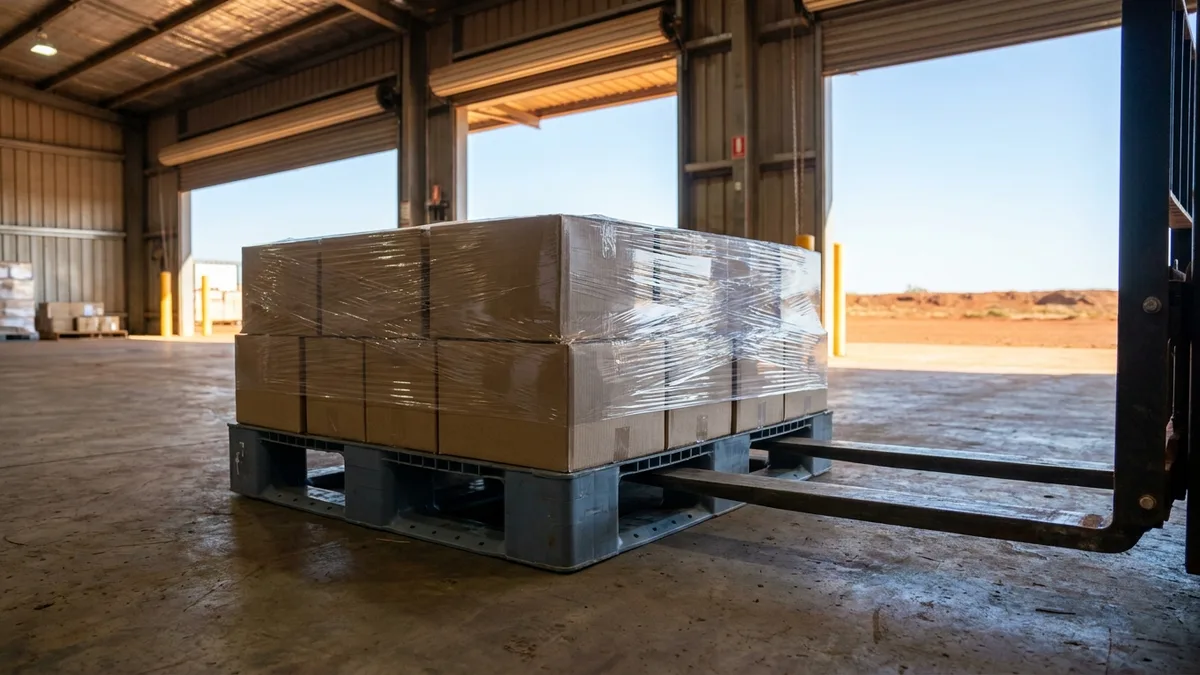
They standardised on the Light Weight Nestable ISO Export Pallet (BPB-E1210): a 1,200 x 1,000 mm ISO-footprint pallet, 130 mm tall, moulded from HDPE, weighing just 6.4 kg, rated to 2,000 kg static and 600 kg dynamic, on a 9-foot base, and nestable. The spec is built for exactly this job. At 6.4 kg the tare barely touches chargeable airfreight weight, so more of the billable payload is instrument rather than pallet. Being plastic, the pallet is exempt from ISPM-15 — no heat treatment, no fumigation certificate, no quarantine hold — so consignments clear biosecurity without the timber paperwork. The 2,000 kg static rating is more than enough for boxed instruments, and nesting keeps any empties cycling back compact in store. The low 50-unit MOQ suited an operation that ships intermittently rather than in constant volume.
The rollout
They put the export pallets under their overseas instrument consignments. The weight saving showed up on the airfreight docket, and — the bigger relief — shipments stopped attracting timber-related biosecurity scrutiny, clearing without the treatment and certification step that had been adding cost and a day or more of lead time. Between shipments the nestable pallets stored compactly, and the consistent, known spec made packing repeatable for a team that does not ship every week.
The estimated result
These are estimates, framed deliberately, because the saving depends on lane and consignment frequency. On payload, the 6.4 kg tare protects an estimated 4-5% of chargeable airfreight weight per position versus a timber board — a direct saving on every air consignment. On biosecurity, skipping ISPM-15 treatment and certification removes an estimated cost and roughly a day of lead time per outbound shipment, and — just as valuable for time-critical instruments — it removes a recurring source of border delay. For an operation sending high-value gear overseas on the clock, we estimate the ultralight, treatment-free export pallet pays for itself quickly across its intermittent but important shipments.