
How a pharmaceutical exporter skipped fumigation and quarantine holds with a light one-way Euro pallet
A pharmaceutical exporter (metro AU).

The operator
This is an Australian pharmaceutical exporter shipping validated cartons of finished product into European and other overseas markets, on the Euro (1200×800) footprint its customers receive on. For a one-way export pallet, two things matter most: it must clear destination biosecurity without drama, and it must not eat chargeable freight weight or warehouse space. Timber was failing the first test and not helping with the second.
The problem with the previous setup
Timber export pallets fall under ISPM-15, the international standard for solid-wood packaging. That means heat treatment or fumigation, a stamped certificate, and the ever-present risk of a consignment being flagged, held or rejected at the destination port if the paperwork or treatment is questioned. For time- and temperature-sensitive pharmaceutical cargo, a biosecurity hold is a serious problem, and the recurring treatment and certification cost was a standing line item the exporter wanted gone.
Why this product
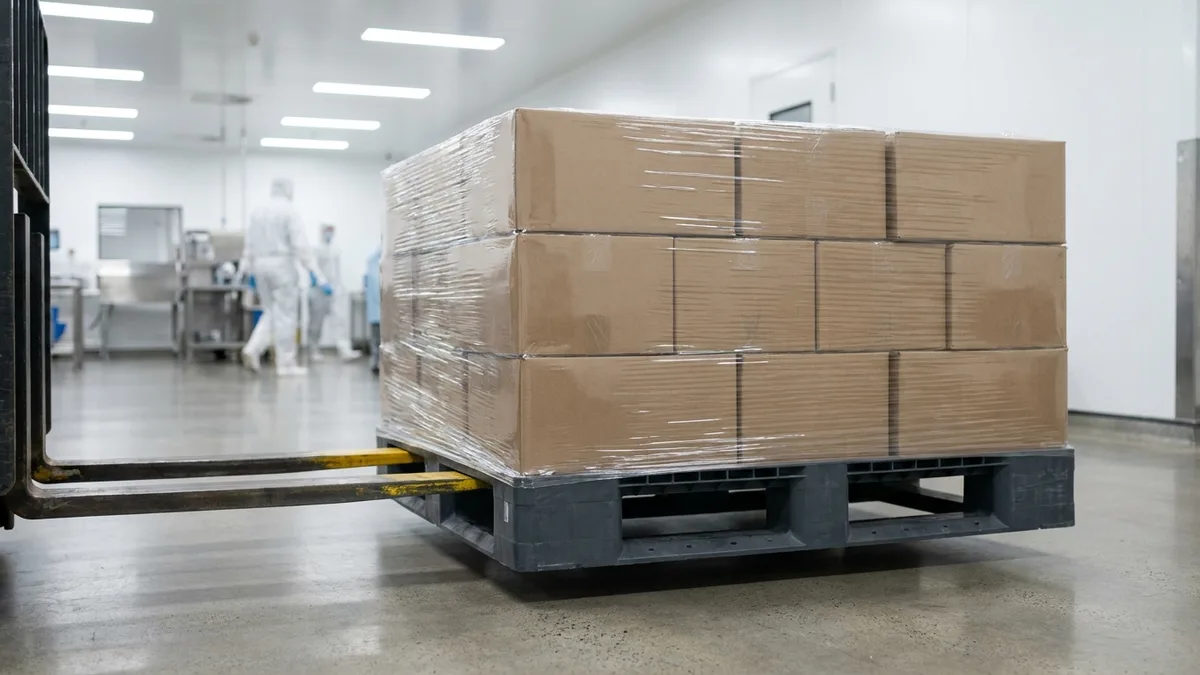
They moved to the lightweight one-way Euro export pallet (1200×800×120 mm, PC/HDPE, 7.5 kg, 3,000 kg static, 1,000 kg dynamic, on a cruciform full-perimeter base, available in Australia in low quantities). Because it is plastic, it is exempt from ISPM-15 entirely — no heat treatment, no fumigation, no certificate, and one fewer reason for a consignment to be held at the border. The full-perimeter cruciform base spreads the load and supports validated cartons stably, the 1,000 kg dynamic rating covers a palletised pharma load, and at 7.5 kg the pallet barely touches chargeable weight.
It being available in low quantities matters for an exporter that does not want to commit to a forklift-load of one-way pallets at a time — the operation can buy to the size of each shipment programme rather than over-order. The smooth, splinter-free plastic deck is also a better neighbour for validated pharmaceutical cartons than timber, with no loose nails or rough edges to snag or contaminate primary packaging in transit.
How the rollout went
The exporter switched its European lane to the plastic pallet first, where biosecurity scrutiny and treatment cost were highest. The immediate effect was administrative: the heat-treatment booking, the certificate and the associated lead time dropped out of the despatch process, and consignments cleared without the fumigation paperwork that timber required. Removing the treatment step also removed one of the recurring causes of a consignment being held or rejected at the destination port, which for temperature-controlled pharma cargo carries a cost well beyond the pallet itself. With the lane proven, the pallet became the default for the operation’s other one-way export movements.
The result (estimated)
Removing ISPM-15 treatment and inspection from the export process is the headline. We estimate it saved an estimated meaningful sum per pallet in avoided fumigation and certification, and shortened despatch lead time by up to a day per consignment by deleting the treatment-and-certificate step — figures framed as estimates, not a fixed price. The low 7.5 kg tare also protected chargeable freight weight versus a heavier timber board, and the splinter-free, full-perimeter deck kept validated cartons stable and clean in transit. Across repeated shipment runs the avoided treatment cost and the removed border-hold risk compound, though the exact saving depends on lane, destination and shipment volume.