
How a Pilbara iron-ore maintenance store stopped termite write-offs and stayed rack-compliant with a recycled heavy-duty pallet
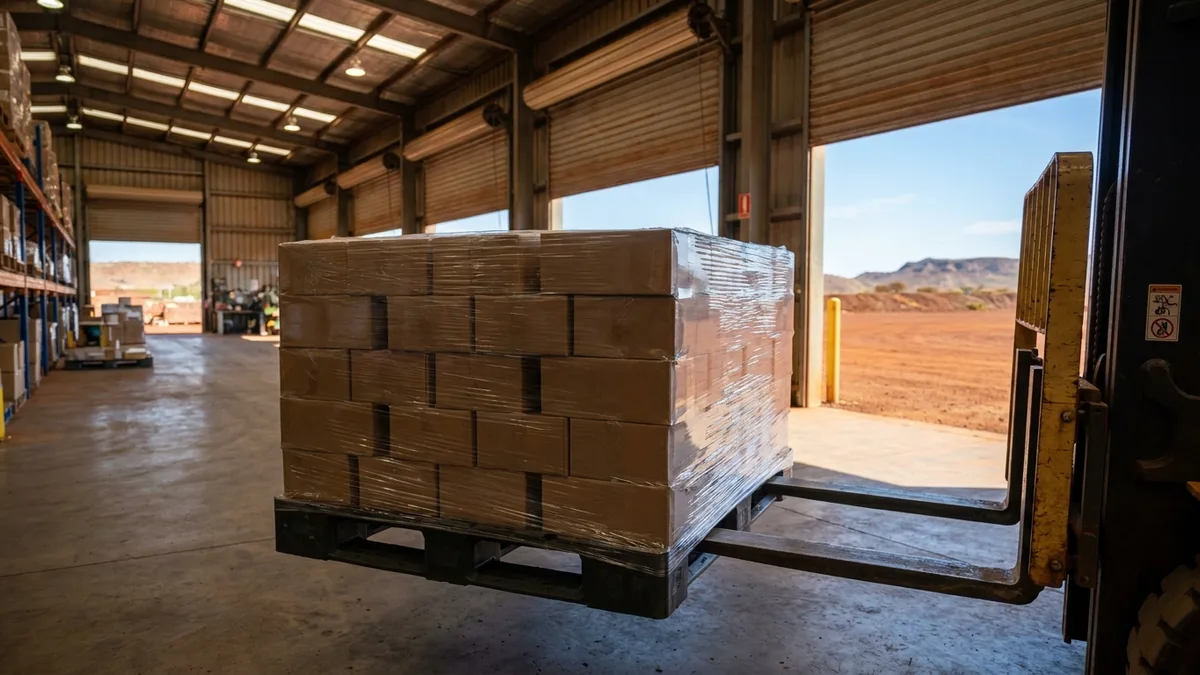
A Pilbara iron-ore maintenance and spares store.

The operator
This is the maintenance and spares store for a large iron-ore operation in Western Australia's Pilbara, holding mechanical spares, fittings and consumables in beam racking inside a hot, remote warehouse. The store has to keep critical parts available and racked safely in an environment that is punishing on equipment: ambient temperatures into the mid-40s, fine red dust everywhere, and termites that treat timber as a food source. They came to us because their pallets were being destroyed faster than they could justify, and their racking compliance was riding on the wrong number.
The problem with the old handling
Spares were racked on timber pallets, and the Pilbara was quietly eating them. Termites and the relentless heat degraded the boards, so a steady proportion of the fleet was being written off and replaced every year — a recurring spend on an item that should last. Greasy and oily parts soaked into the timber and could not be cleaned off. And there was a subtler, more serious issue: the store had been planning racking loads off pallets' headline static figures rather than a verified racking rating, which is exactly how beam stores drift out of AS 4084 compliance without anyone noticing.
Why this product
They moved to the Heavy Duty Recycled Plastic Pallet (BPB-E1165LS): a flat-top 1,165 x 1,165 mm Australian-Standard pallet, 150 mm tall and 24.3 kg, moulded from recycled HDPE, with anti-slip strips, a full-perimeter base, 4-way entry, 10,000 kg static, 2,000 kg dynamic, and — the figure that matters in a rack — a genuine 2,000 kg racking rating. The spec answers every part of the problem. The sealed recycled HDPE is simply not food for termites and does not rot in the heat, so the annual write-off stops. The flat top wipes clean after greasy parts. The anti-slip strips keep loads stable on the deck. And crucially, the store now sizes its beam loads to the published 2,000 kg racking figure rather than the static headline, which keeps the racking demonstrably AS 4084 compliant. The 16-unit MOQ made it easy to roll in progressively across the store.
The rollout
They phased the recycled pallets into the racking, prioritising the bays that had been chewing through timber fastest. The maintenance team set rack loads against the 2,000 kg racking rating from day one, so compliance was built in rather than retrofitted. The pallets shrugged off the heat and the termites that had been destroying timber, and the wipe-clean deck handled the greasy spares without absorbing them. Being a recycled product, the pallets also fit the operation's materials-circularity reporting, which was a welcome side benefit.
The estimated result
These are estimates and depend on how aggressive the local termite and heat load is. On replacement spend, swapping timber that was being binned annually for sealed recycled HDPE, we estimate a drop on the order of 60% in replacement-pallet cost over a five-year horizon. The termite-driven write-offs effectively stop, and each pallet outlasts several of the timber boards it replaced. Just as important and harder to price: by racking to the verified 2,000 kg figure rather than a static headline, the store removes the AS 4084 non-compliance risk that the old approach was carrying. For a remote, hard-to-resupply site, we estimate the recycled heavy-duty pallet pays back within a couple of years on replacement alone, before counting the compliance exposure it retires.