
How a Mount Isa base-metals site cut one-way freight cost and manual-handling strain with a light square export pallet
A Mount Isa (NW Queensland) base-metals operation.

The operator
This is a base-metals mining and processing operation around Mount Isa in north-west Queensland, supplying remote satellite camps and out-stations with reagents, consumables and general freight. A lot of that freight is one-way: pallets go out to a remote camp and, realistically, never come back. The site's procurement team came to us because the pallets they were using for those one-way runs were costing them on two fronts at once — freight handling and worker safety.
The problem with the old handling
One-way consumable and reagent freight was going out on timber pallets. On a one-trip lane that timber is pure cost: it cannot be economically recovered, and when it is exported it triggers ISPM-15 heat-treatment and certification paperwork that adds cost and a day of lead time to a consignment. Timber pallets also splinter and shed nails, and on a remote site the crib-room and store crews handling them by hand were copping splinter injuries and manual-handling strain, which generated safety incident reports the site did not want.
Why this product
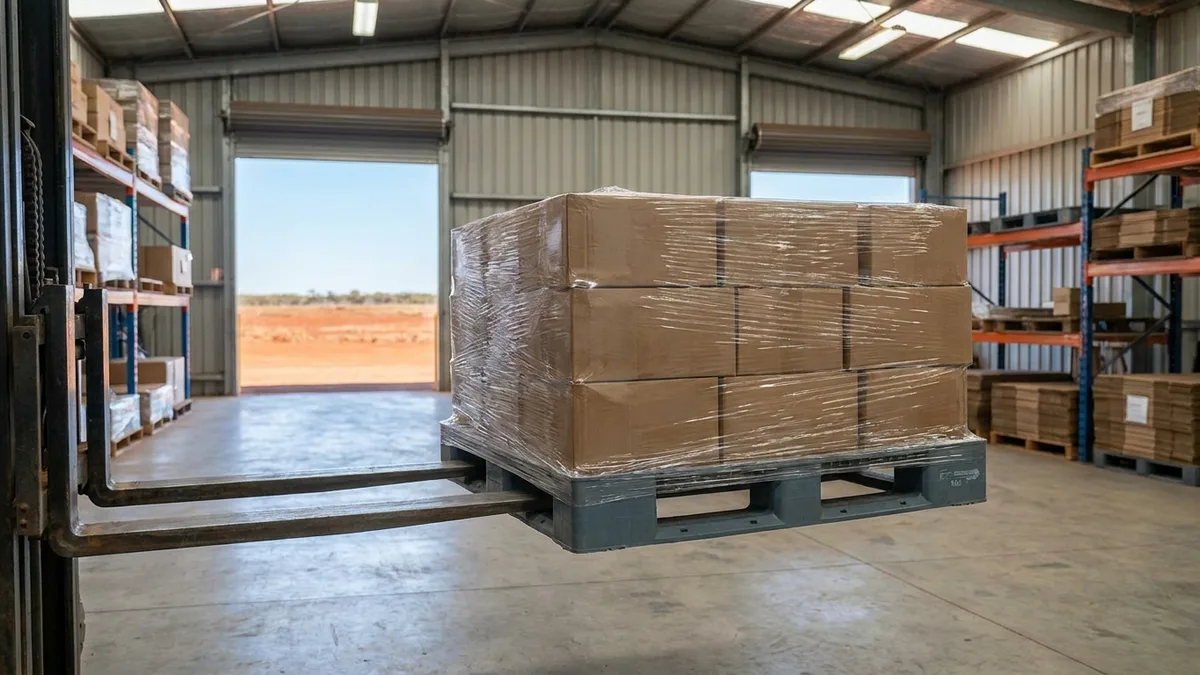
They moved to the Australian and Export Plastic Pallet (BPB-E1111V): a 1100 x 1100 mm square pallet moulded from PE at just 7.5 kg, rated to 3,000 kg static and 1,000 kg dynamic, on a full-perimeter base with 4-way forklift entry and stackability. The spec fits a one-way remote lane precisely. The square 1100 x 1100 footprint matches both Australian-Standard racking and the Asian export footprint, so the same pallet covers domestic and outbound use. Being plastic, it is exempt from ISPM-15 treatment, so the fumigation cost and certification lead time on any export leg simply disappear. At 7.5 kg it is light enough for safe two-handed manual handling, and the smooth moulded deck has no splinters or nails to injure the crew, which removes the safety-report source. The 3,000 kg static and 1,000 kg dynamic ratings carry their consumable and reagent loads comfortably.
The rollout
They put the pallet onto their one-way remote-camp lanes first, where the timber cost and handling strain were worst. The crews immediately noticed the difference handling a 7.5 kg splinter-free deck versus heavy, nail-shedding timber, and the crib-room manual-handling complaints tied to timber tailed off. On the export movements, dropping the ISPM-15 treatment step took cost and a day of lead time straight out of each consignment.
The estimated result
We present the savings as estimates because they depend on lane mix, export volume and how the timber was being handled. On freight and treatment, avoiding ISPM-15 fumigation and certification on the export legs we estimate saves on the order of a meaningful sum per consignment and removes a day of despatch lead time. On safety and handling, the light, splinter-free deck removes the manual-handling strain and the splinter incidents that timber was generating in the crib room and store — a real reduction in safety reports that is hard to put a single dollar figure on but matters to the site. Taken together, we estimate the plastic pallet pays its way on the one-way lanes through avoided treatment cost and removed safety exposure, while still dropping into Australian-Standard racking for domestic use.