
A Lockyer Valley packer cuts crush and doubles a bin as a supermarket display unit
A Lockyer Valley packer moving washed produce to supermarket display.

From cold store to shop floor with too much damage in between
A Lockyer Valley packer moving washed produce from cold store onto supermarket-ready display lines was double-handling and downgrading product along the way. Deep bins crushed the layers at the bottom, trapped wash-water that never fully drained, and then had to be tipped out into separate display packaging at the other end — extra handling, extra damage, extra cost. The timber trays they had been using for the display leg crushed easily and were renewed often.
Why the toughest short vented ISO bin solved two jobs at once
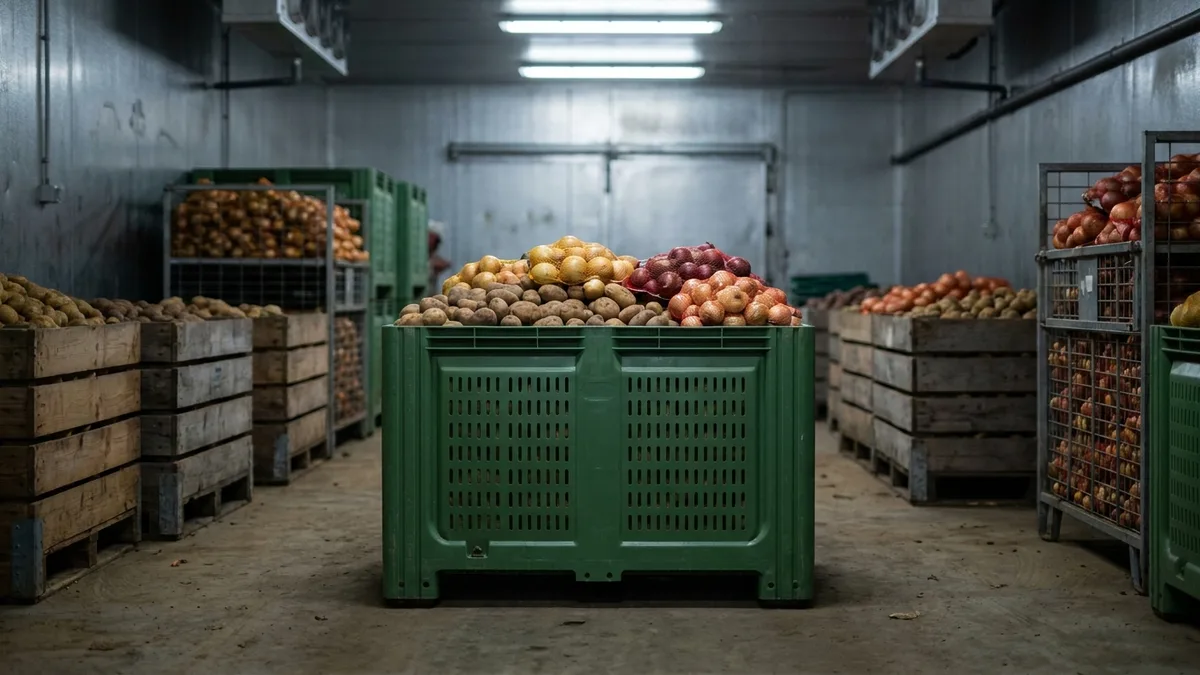
The packer switched to a short, strong vented ISO bulk container built for exactly this dual role. It runs the 1200 x 1000 mm ISO footprint at just 540 mm tall, with an internal depth of around 385 mm and a 395 L body. That shallow depth protects the crop from crush — there is simply not enough column to bear down on the base layer — while full venting drains free wash-water and sheds heat. The body is food-grade HDPE and PP rated to a tough 4,000 to 4,500 kg static and 750 kg dynamic, with 4-way forklift entry. The clean, presentable moulding means the same bin that carried product from the cold store can go straight onto the shop floor as a tidy display unit, cutting out the tip-and-repack step entirely.
The rollout
The packer trialled the short vented bins on a line that ran the full journey from wash to supermarket display, so they could see both ends at once. The crush reduction was visible at pack, and the drainage meant product was not sitting in a pool of wash-water on the way to store. The bigger operational win was removing a handling stage: because the bin doubled as the display unit, crews no longer decanted from a transport bin into separate display trays. On the ISO footprint the bins fit existing racking and handling without change. Once the saving was clear, the packer rolled the format across the relevant display programs.
An estimated result, clearly hedged
The figures below are estimates rather than audited outcomes, and they depend on crop, handling and the specific retail program. With that caveat, we estimate that less crush-and-moisture damage lifted saleable pack-out by an estimated few percent on the affected lines, while the elimination of the tip-and-repack stage trimmed handling labour on top of that. The HDPE bin also outlasts the timber display trays it replaced several times over, so the packer expects the recurring tray-replacement cost to fall substantially over the bin's decade-plus working life. None of this is an absolute price or a guaranteed return; a packer can validate the case against their own downgrade rate, the labour hours tied up in repacking, and their historical spend on disposable display trays — and the conservative read is that reduced damage plus one fewer handling step plus far lower replacement cost comfortably justifies the changeover within a couple of seasons.