
How a seafood processor moved bulk product into a washable solid ISO bulk container
A South Australian seafood processor running daily hot wash-down.

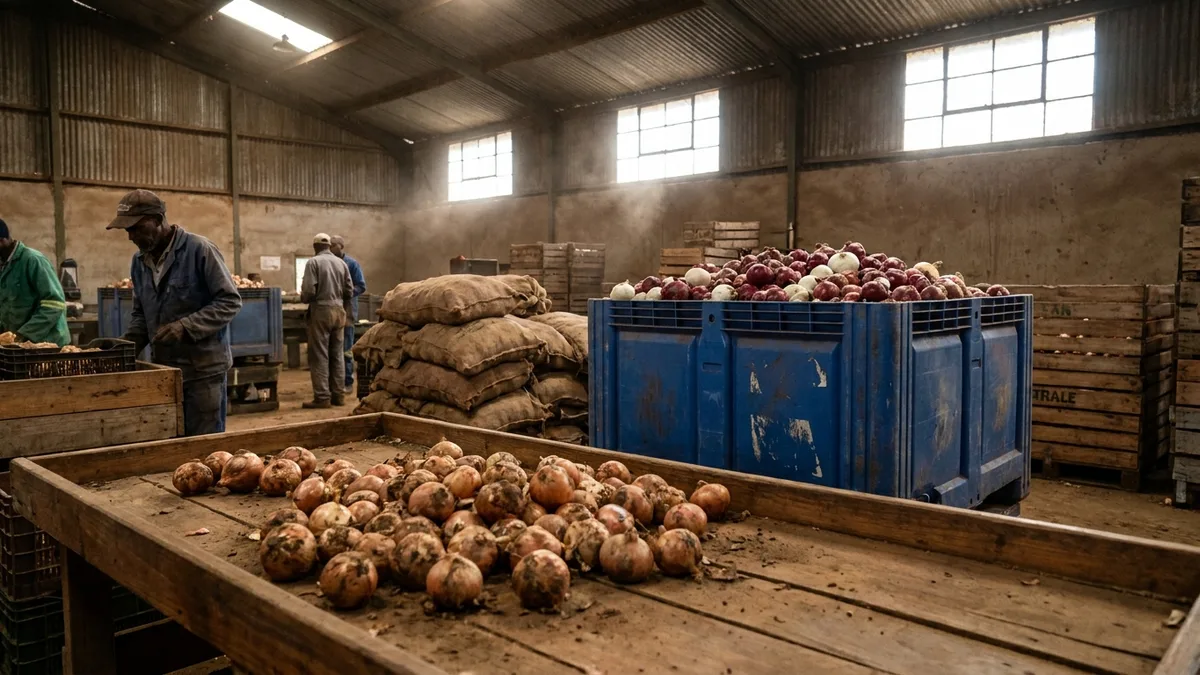
The operation
A South Australian seafood processor handling landed catch — bulk transfer of product between receival, grading, and the packing floor — in a plant that runs an aggressive daily sanitation regime. In a seafood facility, hygiene is not a nice-to-have; it is the licence to operate. Anything that touches product has to drain clean, survive a hot wash, and not give bacteria anywhere to hide. The bins also have to take dense, wet, heavy loads and move on a forklift all shift.
The problem with the old handling
The plant had been using timber tubs for bulk transfer. Timber is the wrong material for a wet protein environment in almost every way: it absorbs water and fish liquor, it holds odour, the grain harbours bacteria that a swab will find, and it slowly rots and splinters under daily hot wash-down. Replacing condemned tubs was a recurring line in the budget, and a failed audit over an absorbent, bacteria-friendly surface was a genuine business risk, not a hypothetical one.
Why this product
They adopted the solid ISO bulk container, described in the catalogue as the strongest solid ISO-standard bulk container available and explicitly suited to fish and seafood. The specifications line up with the job: 1200×1000×740 mm external on the ISO footprint, with a 1128×928×585 mm internal cavity giving 605 litres. The food-grade HDPE and PP body has smooth, non-absorbent solid walls that drain free water and take hot wash-down at 60–80 °C without degrading or harbouring bacteria — exactly what timber could not do. Strength was the other requirement: a 5,000 kg static rating handles dense stacked storage of wet product, and a genuine 1,000 kg dynamic rating means a forklift moves a full, heavy bin safely. Four-way entry suits a busy floor where bins get picked up from whatever side is clear. At 38.5 kg empty it is also far easier to manoeuvre and tip than a sodden timber tub.
How the rollout went
The bins went into the bulk-transfer loop and immediately changed the sanitation story: instead of scrubbing absorbent timber and hoping the swab passed, the crew could hose and sanitise a smooth, sealed surface that dried clean. The non-absorbent walls meant no retained fish liquor and no lingering odour between runs. The strength ratings covered the dense wet loads without the flex and failure they had seen in tired timber. Sanitation sign-off got simpler because the contact surface was now something an auditor expects to see in a modern plant.
The estimated result
The processor estimates that the washable, non-absorbent bin recovers its changeover cost within an estimated two to three seasons, on two fronts. First, it removes the frequent timber-tub replacement that was a standing budget item — an HDPE/PP bin outlasts rotting timber many times over in a wet hot-wash environment. Second, and harder to put a number on but arguably more valuable, it takes a real audit-failure risk off the table by replacing a bacteria-harbouring surface with a sealed, sanitisable one. Both are framed as estimates because actual payback depends on how hard the plant was running through tubs and what an audit non-conformance would have cost in practice. For a seafood operation, moving bulk product into a bin built for fish and seafood — one that drains clean, survives the daily hot wash, and carries the weight — was the straightforward call.