
A Pilbara maintenance store cut backhaul freight with a custom-sized folding vented crate
A Pilbara iron-ore maintenance store running components to and from the coast.

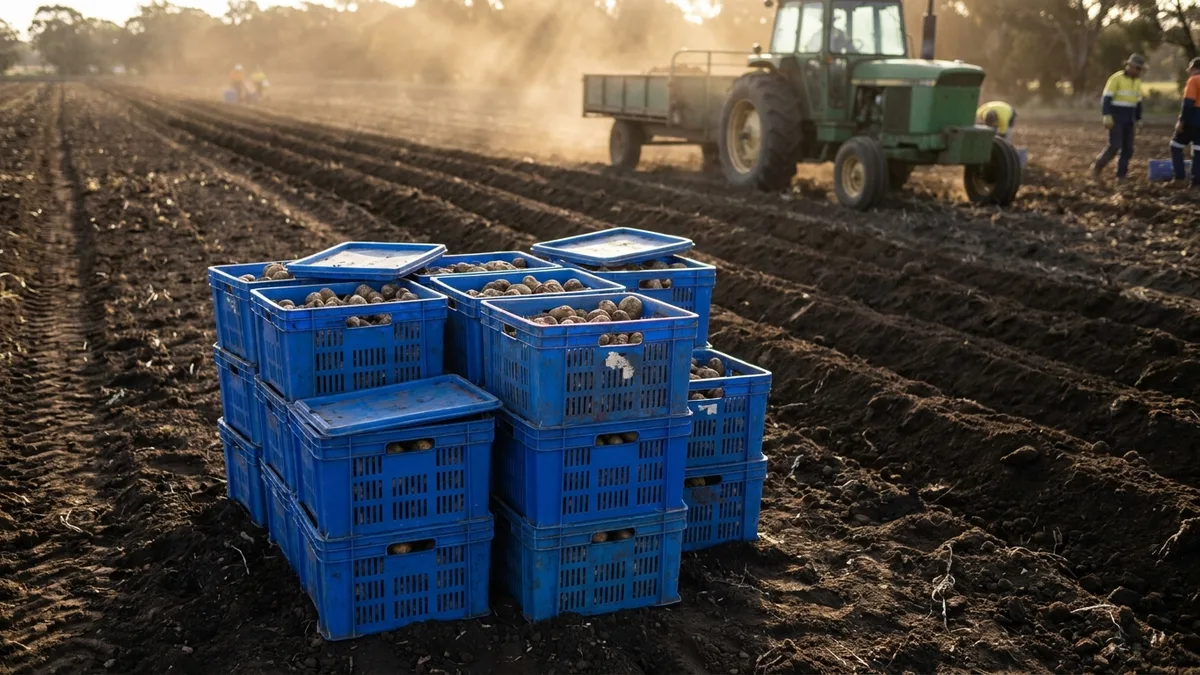
Off-the-shelf crates that fought the racking
An iron-ore maintenance store in the Pilbara cycled core components, rebuilt parts and consumables between a remote inland site and a coastal base. Two things made standard crates a poor fit. First, the store's shelving and the footprint of its key components did not match any catalogue crate size, so off-the-shelf units either wasted shelf space or left parts overhanging and unstable. Second, the long backhaul to the coast punished any rigid empty — a crate that could not collapse rode back at full volume, and on a remote haul that empty cube is paid-for freight. The store also dealt with parts that arrived washed or damp and needed to dry rather than sit sweating in a sealed box in the heat.
Why a crate built to their own dimensions
The store specified the Custom Folding Vented Plastic Crate (BPB-CUSTOM-FV), moulded to its own footprint rather than forced to fit a stock size. Building the crate to the store's shelving and component dimensions meant parts sat fully supported and the units indexed cleanly into the existing racks — no wasted shelf, no overhang. The folding (collapsible) design was the centrepiece for the freight problem: empties collapse flat for the long backhaul to the coast, so the return leg carries folded crates instead of rigid air. The vented HDPE walls let washed or damp components dry in the Pilbara heat rather than corroding in a closed box, and the stackable build kept loaded units stable in transit. A custom unit costs more to tool than a stock crate, but for a fleet that has to fit specific racks and survive a specific haul, sizing the box to the operation is what makes the rest of the savings possible.
Rollout on the component loop
The crates went into the closed loop between site and coast. Components were packed into the right-sized units at one end, freighted, unpacked, then folded flat and palletised for the return. Because the footprint matched the racking, put-away and pick at the store became faster and tidier, and because the crates collapse without tools, adding the fold step cost almost nothing in handling time. Washed parts went in wet and arrived dry, courtesy of the venting.
The estimated result
The headline saving is on the empty leg. With the crates folding flat for the long backhaul, we estimate they cut return-leg freight on empties by an estimated 70% versus shipping rigid boxes — the dominant cost on a remote haul where you pay for every cubic metre regardless of what is in it. Sizing the footprint to the store's racks is also estimated to have recovered an estimated one to two hours per shift previously lost to wrestling mismatched boxes into shelving and re-stacking overhanging loads. The vented walls' part-drying benefit reduces the corrosion and clean-down that damp parts in sealed boxes were causing. These are planning estimates rather than a guaranteed result, and the realised figures depend on haul distance, throughput and how consistently empties are folded and returned. For a remote maintenance store, a crate built to its own dimensions and able to collapse for the trip home turns two chronic frustrations — bad fit and wasted backhaul — into a single solved problem.