
How a Goldfields mining-services warehouse kept consumables clean by capping its ISO bin fleet instead of replacing it
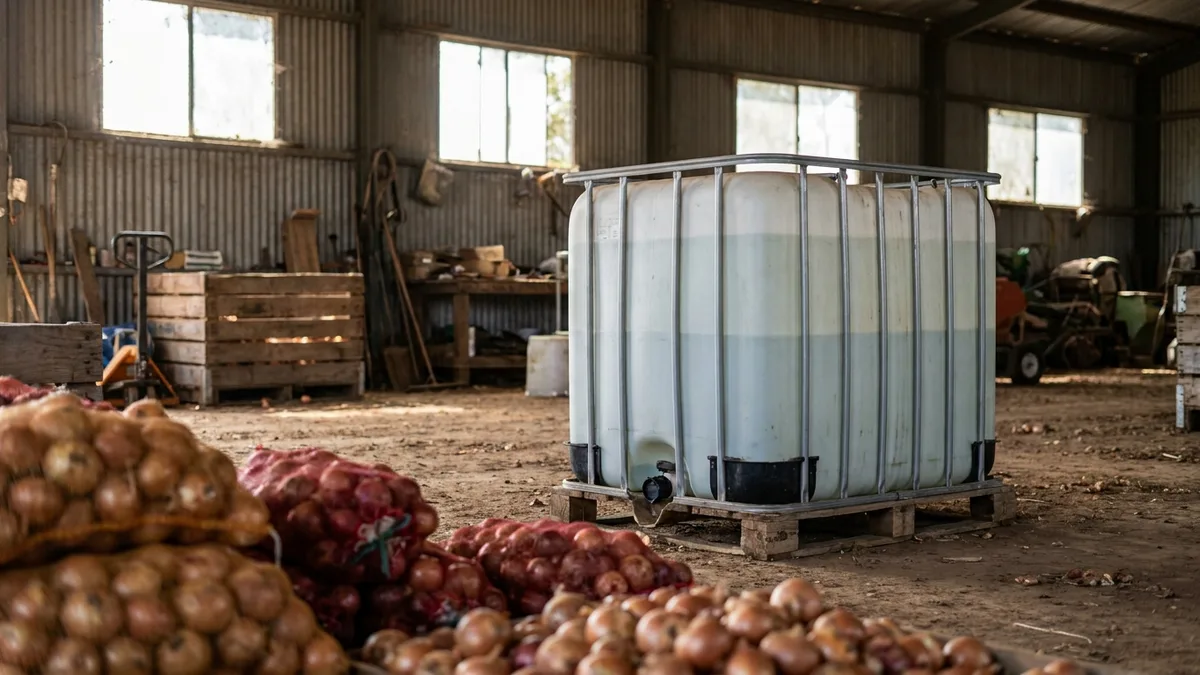
A Goldfields (WA) mining-services warehouse.

The operator
This is a mining-services warehouse in the Western Australian Goldfields, holding reagents, drilling consumables and mechanical spares for several remote sites. Stock is kitted in the shed and trucked out on the ISO (1200×1000) footprint, the standard the operation racks and ships on. The bins doing that work — a fleet of folding ISO bulk containers — were open-topped, and in an exposed Goldfields shed that was quietly costing the store money.
The problem with the previous setup
Fine red site dust gets everywhere, and a hot tin shed with roller doors open all day is no barrier to it. Open ISO bins let dust and the occasional moisture ingress settle straight onto reagents and parts, leading to contaminated consumables, clean-down before dispatch and the odd write-off of product that should have been protected. Replacing the whole open fleet with new lidded containers was hard to justify when the boxes themselves were perfectly serviceable — the operation just needed them covered.
Why this product
The fix was the drop-on ISO container lid (1200×1000 mm, HDPE, 8.5 kg, available from a minimum order of 48). At 8.5 kg it is light enough for one person to seat by hand, it fits every ISO-footprint bin in the fleet, and capping the open boxes let units stack safely two-high in store instead of being dead-stacked open. The HDPE shrugs off the same dust, moisture and rough handling the bins endure, so the cover lasts as long as the container under it.
The point of difference was capital deferred. Adding lids to a serviceable bin fleet costs a fraction of replacing those bins with new lidded units, so the store could protect every consumable on the shelf without a fleet-wide spend — and could buy lids in lots as more bins were brought under cover.
How the rollout went
The warehouse capped the bins holding its most dust-sensitive reagents first, where contamination and clean-down had been worst. The lightweight lids went on without any handling aid, and the immediate change was visible: stock that had sat open under a dusty roof was now sealed, and the covered bins stacked two-high to free aisle space. Lids were then rolled out across the rest of the ISO fleet over subsequent stock cycles.
The result (estimated)
The clear win is capital avoided: we estimate fitting lids ran at an estimated 10–20% of the cost of replacing the same bins with new lidded units, deferring a fleet-wide replacement spend by several years. Operationally, capping the open bins cut dust and moisture reaching stored reagents and parts; while every store is different, the operation expects an estimated reduction in contamination-related clean-down and write-offs, and the two-high stacking recovered useful floor in a cramped shed. Because the HDPE lids are durable reusables, they serve an estimated decade-plus alongside the containers, so the modest outlay keeps protecting stock long after a one-off purchase. These are estimates that depend on dust exposure, storage time and fleet size — not a price quote.