
How a hospital-supply pharmaceutical packer killed box-crush damage with a deep, rigid stacking tote
A hospital-supply pharmaceutical packer (metro AU).

The operator
This is a metropolitan pharmaceutical and hospital-supply packer, picking sterile consumables and medical sundries to order for hospital and clinic customers. The work is regulated, the products are sensitive to contamination and crush, and the picking has to be accurate — a damaged or mis-counted line in a hospital order is a serious problem, not just a cost. The team needed a deeper picking tote that stacked securely without compromising the goods below.
The problem with the previous setup
Bulkier sterile consumables were being picked into single-use cartons. Deep cartons sag and crush when stacked, especially under the weight of a full tote above, and that crush was spoiling product and creating re-pick events — an estimated handful of units lost per pallet. Cardboard also sheds fibre and offers no washable surface, which sits awkwardly in a controlled environment. The packer wanted the extra depth for bulky lines, a clean wall they could wipe down, and a stack that held its shape without nesting into the load underneath.
Why this product
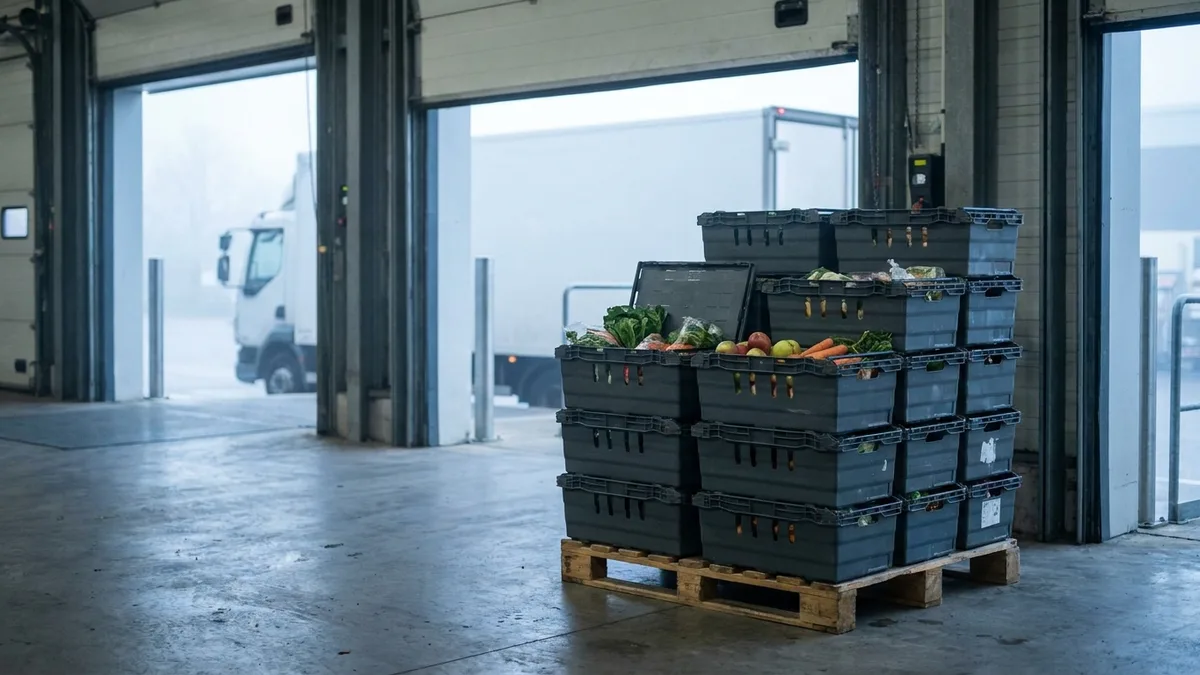
They adopted the 22 L solid plastic crate (430×323×210 mm, food-grade-clean PP, stackable). At 210 mm it gives the extra depth bulkier sterile consumables need, and unlike the shallow nestable totes in the same family it is designed to stack rigidly — it sits squarely on the crate below rather than nesting down into it, so a loaded stack stays stable and the goods underneath are not crushed. The smooth, washable PP wall suits a controlled, regulated environment far better than fibre-shedding cardboard, and at 0.765 kg the empty crate is easy on pickers running a full shift.
Retiring single-use cartons across the deep, slow-moving lines also removed a recurring consumable cost and the cardboard waste stream that came with it. The 430×323 mm footprint matches the shallow 13 L tote in the same AP4 family, so the deep crate shares shelving, trolleys and the existing clip-on lid — the packer could run a single, consistent tote system across both shallow and deep lines rather than introducing an odd size that needed its own handling.
How the rollout went
The packer introduced the crate on its deepest, bulkiest consumable lines first — exactly where carton crush had been doing the most damage. Pickers took to the rigid stack quickly: totes built into stable columns on the trolley and the pallet without sagging into one another, and the washable wall fit the site’s cleaning regime. Because the empty crate weighs only 0.765 kg, the move off cardboard added no meaningful manual-handling load to a shift spent picking by hand. As confidence built, the crate displaced cartons across the remaining slow-moving deep lines.
The result (estimated)
The rigid stack removed the box-crush that had been spoiling product, and the packer expects that to tighten picking accuracy by eliminating the damaged-line re-picks — an estimated handful of units per pallet that previously had to be redone. On cost, the reusable crate retired single-use cartons across the deep lines, and we estimate it pays back against ongoing carton spend within an estimated 12–18 months, after which it keeps saving every cycle while cutting cardboard waste to near zero. The washable PP surface also simplifies sanitation sign-off in a regulated environment. These are estimates that depend on line volume, pick mix and handling, and are not a price quote.