
How a Riverina winery cellar door switched to a recycled 52L stack-and-nest crate
A Riverina (NSW) winery cellar door and small supermarket supplier.

The operation
A Riverina winery with a cellar door and a small supermarket-supply line needed a storage tote for finished-goods picking and back-of-house transfers — moving bottled stock, packaging and bottling-line bits between the cellar, the store and despatch. Sustainability is part of how they present the brand, so the packaging they use in front of customers and in their own operation is something they actively think about, not just a cost line.
The problem with the old handling
The work was being done with cardboard cartons. In a cellar environment cardboard is a poor performer: it absorbs ambient moisture and sags, it crushes when stacked, and it is a single-use item that has to be bought again and again and then disposed of. For a business leaning on an environmental message, a back room full of disposable cardboard was also slightly off-brand. And rigid boxes that cannot nest meant empties took up as much room as full ones between uses, which a cellar door short on space could not afford.
Why this product
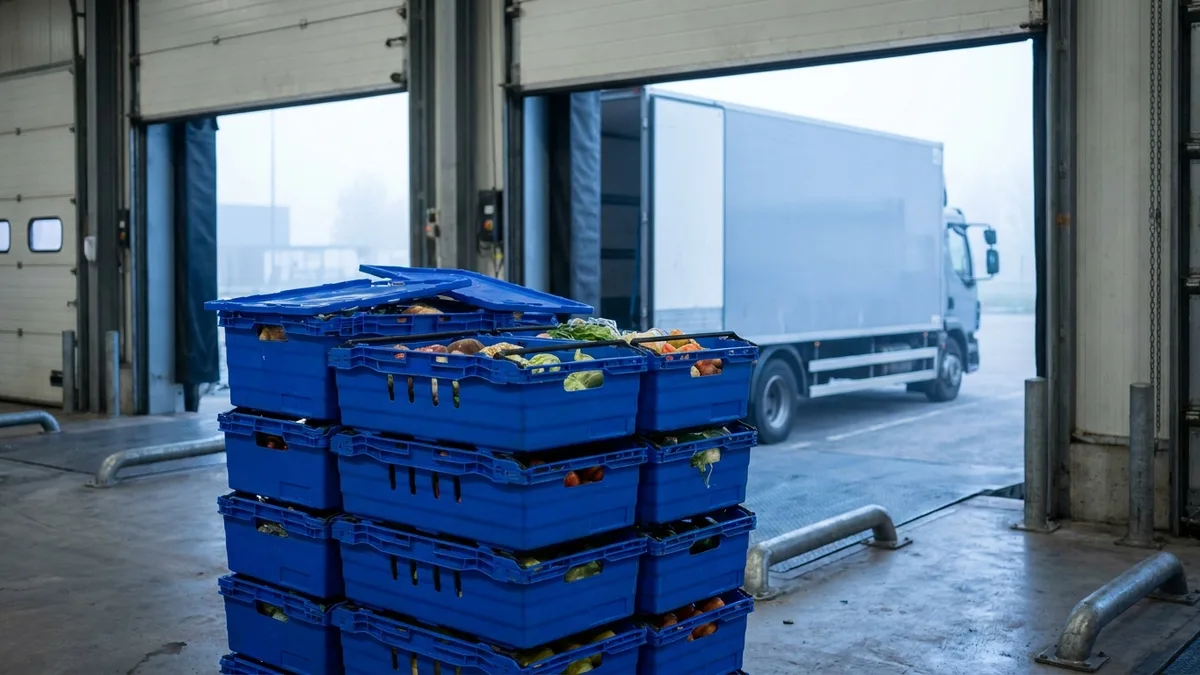
They moved to the 52-litre stack-and-nest solid crate, moulded from recycled plastic. The recycled content was a deliberate choice that supports the winery's environmental positioning — it is a story they can tell as well as a tool they can use. The specifications suit the job: 645×413×276 mm external with a 597×362×266 mm internal cavity giving 52 litres, a solid washable surface that stays clean in a damp cellar where cardboard fails, and a dual-function design that stacks rigidly when full and nests down when empty. At 1.8 kg each they are light to handle around the cellar door. The nesting is the practical winner in a space-constrained site: empties collapse into one another instead of standing around at full volume.
How the rollout went
The crates went into finished-goods picking and back-of-house transfers and immediately held up better than the cardboard in the cellar's humidity, with no sagging or crush. Full crates stacked securely on pallets and in the store; empty crates nested down between uses and gave the team back a chunk of floor they had been losing to flat-packed and stacked cardboard. The washable surface meant a crate could be wiped out and reused rather than discarded, and the recycled-plastic look fitted the cellar-door environment.
The estimated result
The winery estimates the crates pay back against ongoing carton spend within an estimated 12–18 months, and last many cycles longer than cardboard in a humid cellar where boxes were failing fast. Nesting the empties is estimated to reclaim around 55% of the storage footprint the rigid boxes had been occupying between uses — a real gain at a space-tight cellar door. These figures are estimates, dependent on how many cycles each crate survives and how much carton the business was getting through, but the combination is compelling: a tougher, washable, reusable tote that performs in cellar conditions, reclaims floor space when empty, and carries a recycled-content story the winery can put in front of its customers and into its packaging-waste reporting.