
How a vaccine and biologics exporter protected airfreight payload and skipped quarantine with a light nestable Euro pallet
A vaccine and biologics exporter shipping to Europe.

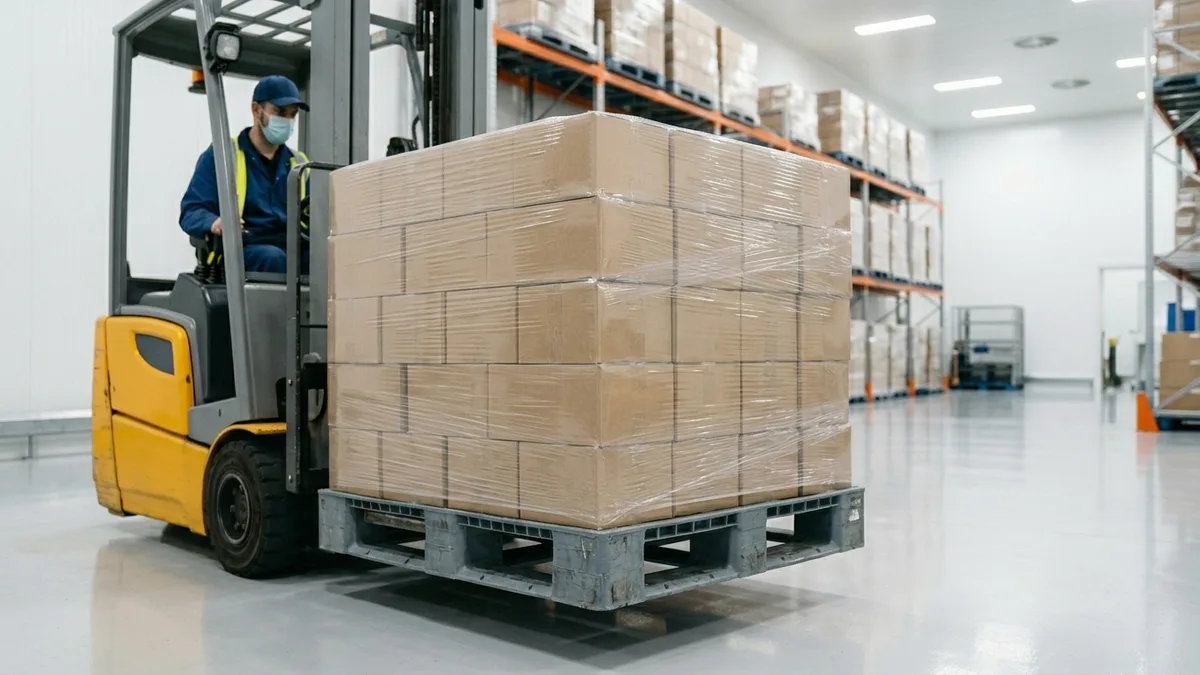
The operator
This is an Australian vaccine and biologics exporter shipping temperature-sensitive product to Europe. Their cargo is high-value, validated, and frequently moves by air, where two things dominate the economics: every kilogram of pallet tare displaces chargeable payload, and any biosecurity treatment or hold on the pallet is both a cost and a risk to a time-and-temperature-critical shipment. They wanted a Euro pallet that was light, that nested down to save space in a controlled store, and that cleared European biosecurity without treatment.
The problem with the old handling
Shipping validated biologics on timber pallets created friction on two fronts. First, weight: a heavy timber pallet eats into the chargeable airfreight payload, so the operator was effectively paying to fly pallet rather than product. Second, biosecurity: timber pallets bound for Europe must be heat-treated or fumigated to ISPM-15 and certified, which adds cost, adds a despatch lead-time step, and introduces the risk of a quarantine hold — exactly what you cannot afford on temperature-controlled biologics. Empty pallets also took up scarce, controlled storage space at full footprint between shipments.
Why this product
They moved to the Light Weight nestable Euro Plastic Pallet (BPB-830): a 1200 x 800 mm Euro footprint, just 8 kg, in HDPE, rated to 4,000 kg static and 1,000 kg dynamic, on a nine-foot nestable base. The fit is precise. At 8 kg it is light enough to protect chargeable airfreight weight while still carrying a useful stacked and dynamic load for the cargo. Being plastic, it is exempt from ISPM-15 — no fumigation, no certificate, no quarantine treatment step — so consignments clear European biosecurity without the timber-treatment regime and without the hold risk that genuinely matters on temperature-critical product. And it nests: empties collapse into each other to a fraction of erected height, recovering scarce space in the controlled store and cutting the cube of any pallets cycled back.
The rollout
They transitioned their European airfreight lanes to the nestable Euro pallet. The treatment step dropped straight out of despatch — no more booking heat treatment or chasing certificates per consignment — which both saved cost and shortened the time from pack to wheels-up. The light tare freed payload on every flight, and the nested empties freed a block of space in the controlled store that full-footprint timber had been occupying. The modest MOQ of 40 let them field a fleet sized to their shipment cadence.
The estimated result
These are estimates, framed as such, because airfreight and compliance savings vary with route, rate and shipment profile. On compliance, removing ISPM-15 treatment and inspection, we estimate, saved on the order of a meaningful sum per pallet and avoided the border-delay risk on each outbound consignment — with the avoided quarantine hold being the saving that matters most on temperature-critical biologics. On space, nesting the empties roughly halved the cube of any return movements compared with the flat timber pallets used previously, and reclaimed controlled-store footprint between shipments. And the light 8 kg tare preserved chargeable airfreight payload on high-value cargo where every kilogram counts. Over repeated shipments, we estimate the avoided treatment cost and the reclaimed payload compounded quickly.