
A Sydney pharmaceutical distributor covers low-priority moves with used light Euro pallets
A Sydney pharmaceutical distributor handling low-priority internal moves.

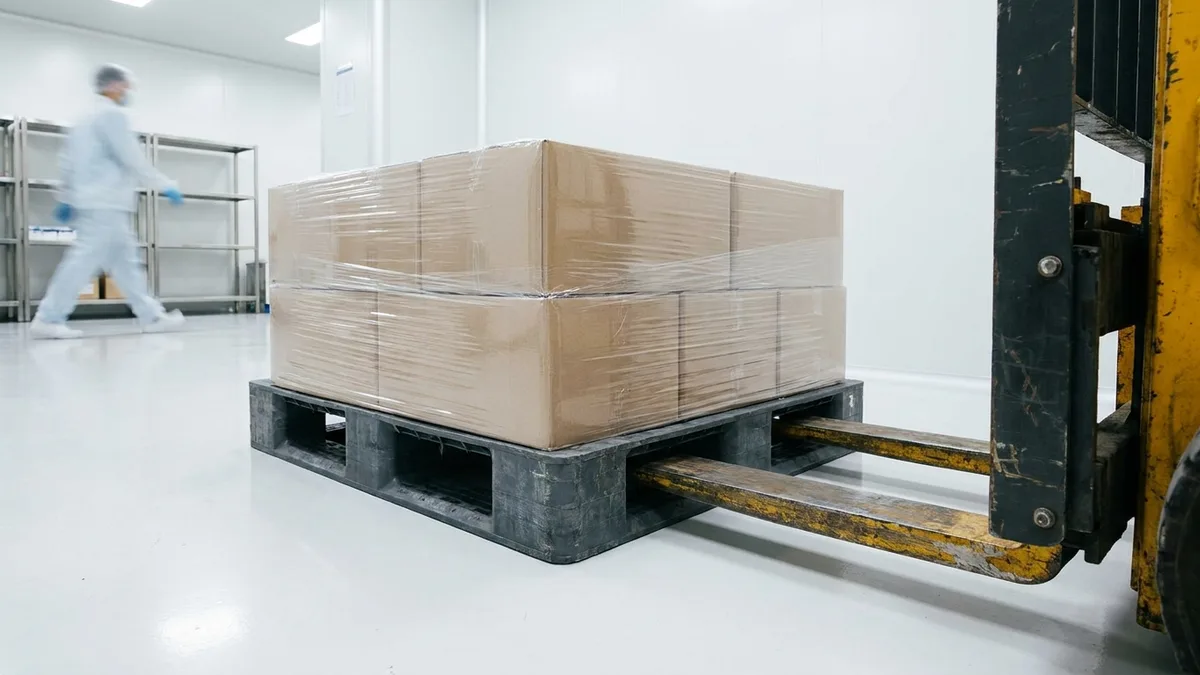
A capital-free need for cheap, clean, light pallets
A pharmaceutical distributor in Sydney needed extra light Euro pallets for low-priority internal moves, but the task did not justify a capital outlay on new units. The work was non-critical — shifting stock around the site rather than export or heavy racking — so paying new-pallet prices made no sense. At the same time, anything used near sensitive pharmaceutical stock had to be cleaner than the splintering, nail-shedding timber pallets that had been filling the gap in cleanroom-adjacent areas.
Why second-hand light Euro plastic pallets fit the brief
The distributor took second-hand light-weight 1200 x 800 mm Euro pallets — a mixed-make pool in PC, PO and HDPE — at a used price point. For non-critical internal handling the reconditioned decks were entirely adequate, and the used route kept the spend low without a capital request. The plastic construction is the quality angle that mattered here: a splinter-free, nail-free deck suits cleanroom-adjacent areas far better than timber, with no loose nails near sensitive stock. And being a nestable light-weight design, the empties collapse down for compact storage between uses, so they do not clog the floor in a space-conscious distribution site.
Buying a defined Euro 1200 x 800 mm size, even second-hand, kept handling predictable: the pallets index into the same racking, jacks and doorways as the rest of the site's gear, so there was no relearning for the crews using them. A mixed-make pool in PC, PO and HDPE is perfectly suited to internal movement where cosmetic uniformity does not matter and the loads are light — exactly the situation where paying for new, matched units would be wasted money. The light tare also makes them easy for staff to lift and re-stack by hand, which suits the ad-hoc nature of internal moves better than a heavy industrial pallet would.
The rollout
The distributor put the used pallets straight into low-priority internal rotation, where the cost saving was the point and the handling was undemanding. The reconditioned decks performed reliably for the job, and the clean plastic surface was an immediate improvement over the timber it displaced in areas near sensitive stock — no splinters, no shed nails. Nesting kept the empties compact between moves. Satisfied with the economics and the cleaner handling, the distributor kept the used pallets as its standard for non-critical internal work.
An estimated result, clearly hedged
These are estimates rather than guaranteed savings, and they depend on availability, condition and how a given site values floor space. On that basis we estimate buying used rather than new cut the pallet outlay by an estimated 40 to 60% — the decisive saving for a non-critical task that could never justify new-unit prices. The splinter-free plastic deck is estimated to have suited cleanroom-adjacent areas far better than the timber it replaced, removing the loose-nail and splinter risk near sensitive pharmaceutical stock, while the nestable design kept empties compact in storage. We are not quoting an absolute price or a promised return; a distributor can test the case against the new-versus-used price gap and its own space constraints, and the conservative read is that a sub-half-price entry plus cleaner, safer handling makes the used pallets an easy call for low-priority internal moves.