
How a Melbourne distributor covered a seasonal peak with second-hand heavy-duty Euro pallets and no capital outlay
A Melbourne (VIC) distribution operation.

The operator
This is a Melbourne-based distribution operation that runs a pronounced seasonal peak, where demand spikes for a few months and then settles back to a baseline. For that kind of business, buying brand-new pallets to cover a short-lived surge ties up capital in kit that sits idle for most of the year. They came to us needing extra heavy-duty Euro pallets to get through the peak, but explicitly without a capital approval or a long-term commitment.
The problem with the old handling
Their core pallet pool was sized for baseline demand, so the seasonal spike left them short of rackable heavy-duty pallets at exactly the wrong time. The options were unappealing: buy new units at full price for capacity they only needed for a few months, or try to limp through the peak under-resourced and risk slowing despatch. Buying new for a temporary surge is the classic mistake — the pallets do their job for one busy season and then sit in a corner depreciating.
Why this product
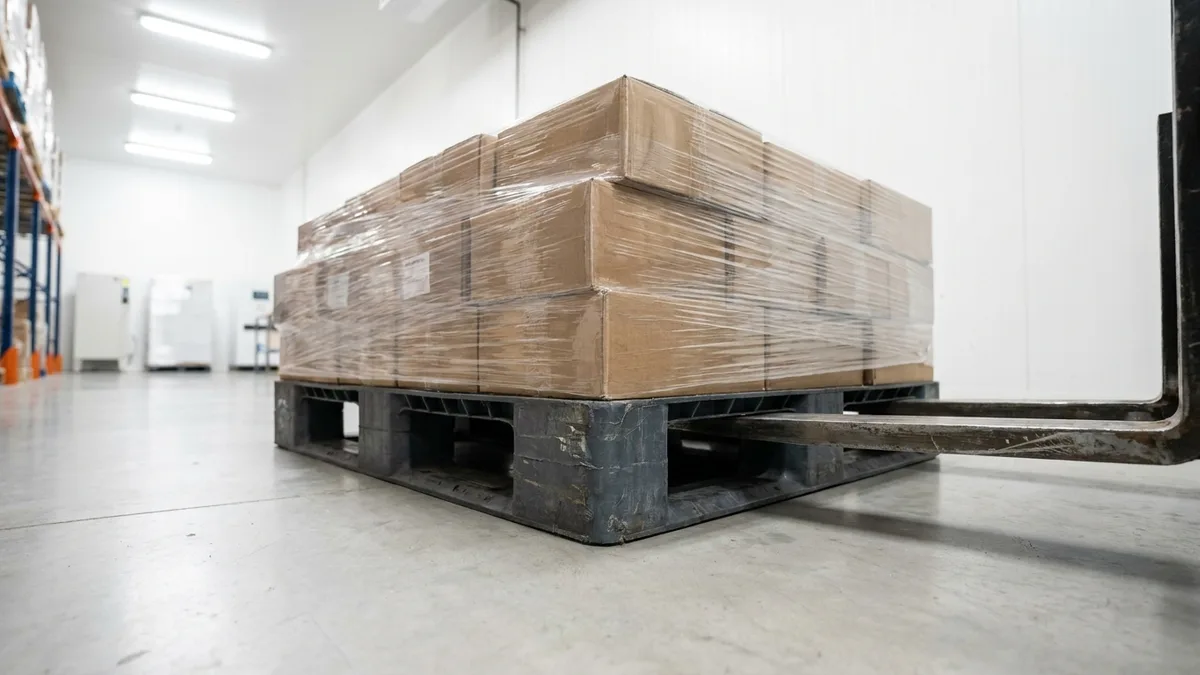
They took the Heavy Duty Used Plastic Pallet (BPB-810UH): second-hand 1200 x 800 mm Euro pallets, rackable and stackable, in mixed makes and materials, at a used price point. For a finite, short-term need this is exactly the right tool. A reconditioned heavy-duty Euro pallet carries racked loads reliably in the rack just as a new one would, but at a fraction of the cost — so the operation gets compliant, durable capacity for the peak without sinking capital into kit it does not need year-round. Being plastic rather than timber, the units also sidestep the rot, splinter and ISPM-15 issues that a timber stop-gap would have carried, and they simply fold back into the general pool once the peak passes.
The rollout
They brought the used pallets in ahead of the seasonal spike and put them straight into racking alongside the core fleet. For a temporary capacity bump the reconditioned units performed like new — they racked and stacked reliably through the busy period with no special handling and no retraining for the forklift crews, since a used Euro pallet handles identically to a new one. Because the units were rackable and stackable they went into the same beam locations and floor stacks as the standing fleet, so the overflow capacity slotted in without re-planning the layout. When demand settled back, the pallets were absorbed into general rotation rather than left idle, so nothing was stranded as a depreciating asset.
The estimated result
We frame the saving as an estimate because it depends on the new-versus-used price spread at the time of purchase. The core economics are clear, though: buying second-hand rather than new for short-term capacity we estimate cut the pallet outlay by roughly 40-60% versus new units — an easy call for capacity that was only needed for a few months of the year. The operation got rackable, durable Euro pallets through its peak with no capital approval and no idle asset afterwards. And because the pallets are plastic rather than timber, they avoided the rot, splintering and ISPM-15 treatment hassle a cheaper timber stop-gap would otherwise have introduced, so the cost saving did not come at the price of a lower-spec, higher-maintenance pallet.