
A Vaccine-Logistics Operator Nests Its Return Empties to Cut Reverse Freight
A temperature-controlled vaccine-logistics operator.

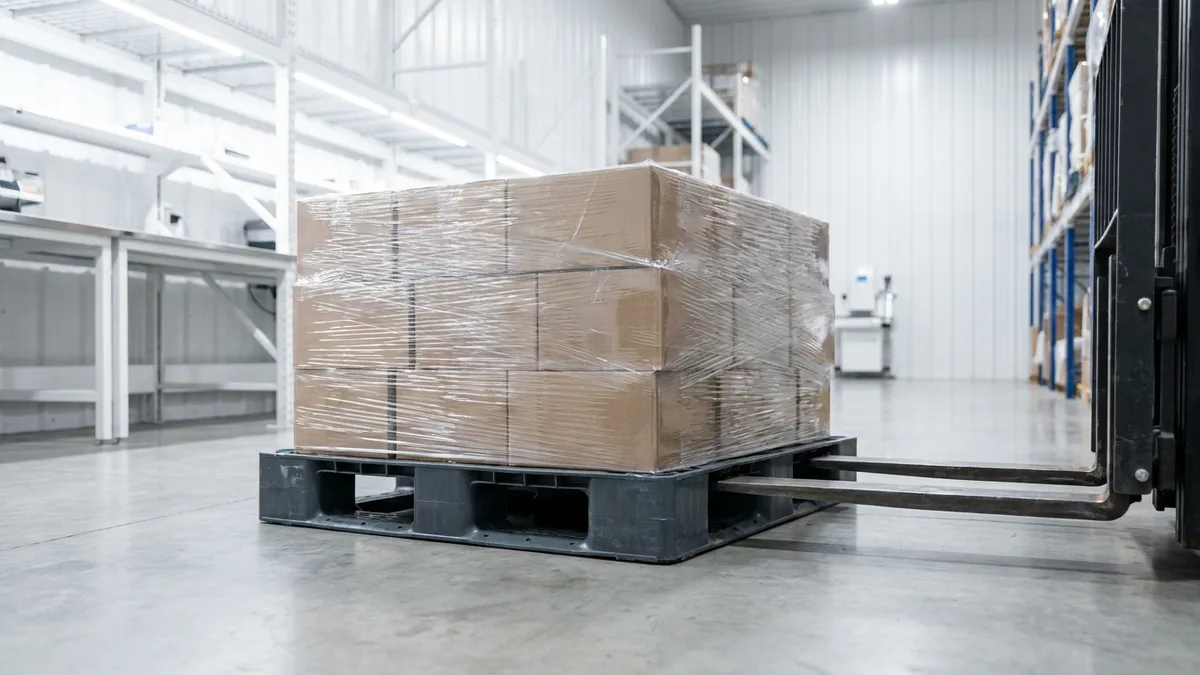
The operation
This is a temperature-controlled vaccine and biologics logistics operator, shipping validated cartons of cold-chain product on Euro (1200 x 800) pallets. In their world two things are non-negotiable: a hygienic, splinter-free surface against validated packaging, and tight control of cost on a closed loop where pallets cycle back empty.
The problem with the old handling
Their pain was on the return leg. Pallets that went out under cold-chain cartons came back empty, and flat timber pallets returning at full footprint burned truck space on every reverse movement — they were paying to freight air back. Timber also brought a hygiene problem against validated pharmaceutical packaging: splinters, loose nails, and a porous surface that doesn't belong in a controlled cold-chain handling environment.
Why this pallet
They chose the BPB-810, a medium-duty nestable Euro plastic pallet. It is a 1200 x 800 mm pallet at 140 mm tall, moulded from HDPE, weighing 10 kg, rated to 4,800 kg static and 1,200 kg dynamic on a 9-foot base, and both nestable and stackable. The nesting was the headline feature. Because the pallets nest tightly into each other when empty, a return load of empties carries far more pallets per trip than flat timber ever could — the reverse-logistics cube comes right down.
The smooth HDPE deck was the second reason: it suits cleanroom-adjacent handling, presents a hygienic splinter-free surface against validated packaging, and wipes clean. The 4,800 kg static and 1,200 kg dynamic ratings give plenty of margin for stacked cold-chain cartons, and at 10 kg the pallet is easy to manage manually in a temperature-controlled space.
The rollout
With a low minimum order of around 40 units, the operator was able to bring the pallets into their closed loop in a controlled way and scale as the loop proved out. They set up the return flow to nest empties on the backhaul, confirmed the smooth deck met their cold-chain handling requirements, and standardised the Euro footprint across the validated-carton lanes so the loop ran on one pallet spec.
The result — estimated
The reverse-freight saving is the clear win, framed as an estimate. Nesting the empties roughly halved the cube of return-empty movements versus flat timber — collapsed-down nested pallets simply pack far tighter on the truck. Translated to the freight bill, we estimate that trimmed something in the order of 4-5% off the operator's reverse-logistics freight, recurring on every return cycle in a closed loop.
The hygiene gain runs alongside it: the smooth HDPE deck removed the splinter, nail and porosity risk that timber posed against validated packaging, which matters more in cold-chain pharma than any freight number. There is also a durability angle worth noting — an HDPE pallet of this grade holds up through repeated handling cycles where timber would have splintered and been condemned, so the operator is not feeding a steady replacement budget on top of the freight saving. We frame the freight figure as an estimate because it depends on lane structure and how full the return trucks run, and because the closed-loop nature of the operation means the nesting benefit recurs on every single cycle rather than landing as a one-off. The mechanism is straightforward: a nestable pallet turns a return leg full of air into a return leg full of pallets, on a hygienic deck that belongs in the cold chain.