
How a Goldfields minerals recycler ended torn-bag losses with the world's largest one-piece solid pallet box
A Western Australian (Goldfields) minerals recycling processor.

The operator
This is a minerals and metals recycling processor operating out of the Western Australian Goldfields, taking in high-value reclaimed material and bulking it up for onward sale and reprocessing. Their margin lives and dies on how much saleable material actually makes it from the floor into a sold load — every kilo lost to spillage or double-handling is money straight off the bottom line. They came to us because the containers they were using to consolidate high-value regrind and reclaimed material were leaking product onto the floor and multiplying handling.
The problem with the old handling
High-value material was being bulked into flexible bulk bags (FIBCs). On a heavy, abrasive minerals stream, bulk bags tear, chafe and split at the seams, and when they do, saleable material ends up on the floor where a good portion of it is effectively lost. The bags also could not be stacked or moved cleanly once full, so the operation was double-handling material that should have moved once, and a forklift could not safely lift a compromised bag without risking a spill. For a high-value stream, the leakage was a real and recurring shrink line.
Why this product
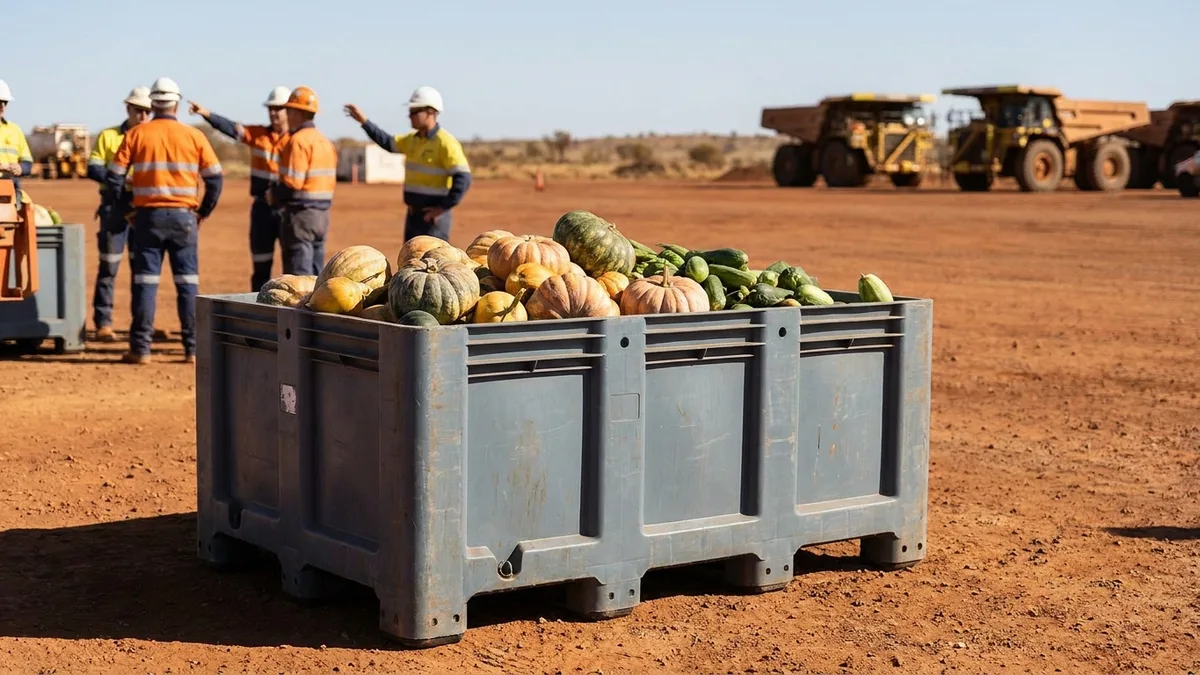
They moved to the Giant Solid Plastic Pallet Box (BPB-1311S): at 1300 x 1150 x 1250 mm with a 1400 L body, it is the largest one-piece solid bulk container made, moulded in a single piece from HDPE, rated to 7,000 kg static and a substantial 2,000 kg dynamic, on a full-perimeter or three-skid base with 4-way forklift entry. The spec is purpose-made for this problem. One 1400 L box consolidates what several bulk bags used to hold, so the number of handling units drops sharply. The rigid, one-piece HDPE walls simply do not tear or seam-split the way a bag does, which ends the floor losses. And the 2,000 kg dynamic rating — high for a box this size — means a forklift can lift and move it full without the spill risk a compromised bag carries. The 4-way entry suits busy yard handling from any approach.
The rollout
They started by switching their highest-value material streams off bags and into the giant boxes, where the leakage had been costing them most. The effect was immediate: material that used to escape through torn seams stayed contained, and consolidating several bags' worth into a single box cut the number of moves to fill, shift and tip a batch. The crew found the rigid box far easier to lift full and far safer to stack than a bulging bag, and the floor under the bulking station stopped accumulating spilled product.
The estimated result
We present the savings as estimates because they depend on material type, throughput and how leaky the previous bags were. The two levers are clear. Consolidating several bags into one 1400 L box reduces the number of container moves needed to clear the same tonnage, cutting handling time at the bulking station. And eliminating torn-bag losses recovers high-value material that was previously lost to the floor — on a valuable minerals stream that is the headline saving. Taken together, we estimate fewer movements plus the end of bag-spill losses cut combined handling and shrink cost by an estimated 20-30%, and because the box is a one-piece HDPE reusable it keeps delivering that on every batch rather than being a recurring single-use spend like the bags it replaced.