
A South Australian export almond grower drops fumigation paperwork and lifts payload with 7.15 kg ISO light-weight plastic pallets
A South Australian Riverland almond and dried-fruit grower shipping packed product to NZ, US and European consolidators..

The operator and the problem
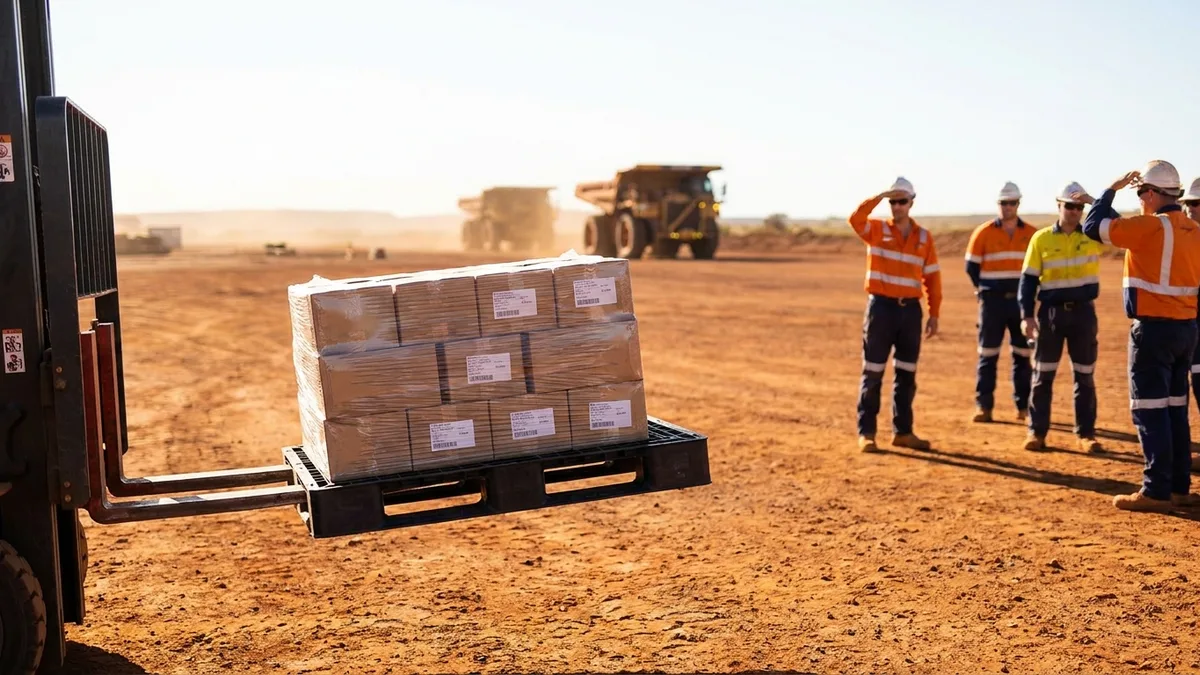
A South Australian almond and dried-fruit grower running a Riverland packing shed came to us with a freight problem dressed up as a pallet problem. The operation ships finished product to consolidators bound for New Zealand, the United States and Europe, and every one of those lanes carries a timber headache. Heat-treated wood pallets need ISPM-15 certification, they add weight that eats into payload, and on long export legs the empty return of pallets is money burned. Their packs were also inconsistent: damaged stringers, the odd protruding nail near food product, and a pallet weight that varied load to load. They wanted one export-grade platform that was light, clean, predictable and accepted at the border without fumigation paperwork.
Why this pallet
The BPB-1210 is a 1200 x 1000 x 135 mm ISO-footprint pallet in polyethylene, and it solved the brief on weight first. At 7.15 kg it is markedly lighter than an equivalent timber export pallet, which on a weight-capped lane converts straight into more saleable product per consignment. Because it is moulded PE rather than wood, there is no ISPM-15 obligation at all, so the certification, fumigation and the 7-to-10 day delays that come with timber simply drop off the job. The plate carries a 2500 kg static and 1000 kg dynamic rating, comfortably inside the weight band of palletised almond cartons and bagged dried fruit. Four-way forklift and pallet-truck entry suited their mixed shed equipment, and nine feet on the base gave the stable footprint they needed for clean truck loading. One detail we were straight about: this is a light-weight export platform with no rated racking load, so it is specified for shipping and shed handling, not loaded beam storage.
The rollout
Minimum order on this line is 540 units, and that suited a grower shipping at export volume rather than in dribs and drabs. We started them on a single container's worth to prove the footprint against their carton pattern and their consolidators' requirements, then they committed to the full 540 for the season. Because the pallet is both nestable and stackable, the inbound delivery of empties arrived nested and took up a fraction of the floor space a block-pallet equivalent would have, which mattered in a shed already tight for room. Empties stack square when in use and nest down when not, so storage between runs stopped being a problem. Changeover needed no new gear: the four-way entry meant their existing forklifts and pallet jacks worked from day one, and crews were running the new platform inside a shift.
Industry fit
For an export-focused produce operation this is close to a natural fit. The agriculture and food-distribution use case is exactly what a light, clean, ISO-footprint PE pallet is built for: hygienic surfaces with no nails near product, a consistent tare weight that makes consignment paperwork predictable, and a 1200 x 1000 mm footprint that consolidators and overseas receivers already recognise. The same pallet earns its keep in automotive parts movement and lighter mining consumables, but it is the export grower shipping into New Zealand, the United States and Europe who gets the cleanest win, because the no-fumigation advantage compounds on every international leg.
Estimated result
Taking the grower's own freight pattern, the gains stack up across three areas. Dropping ISPM-15 certification and fumigation removes a per-container cost and, just as valuable, takes roughly 7 to 10 days of delay out of each export booking. The lighter 7.15 kg platform lifts saleable payload on weight-capped lanes, so more product moves per consignment. And because the pallet is engineered for many trips rather than the handful a timber pallet survives, the per-trip cost trends down sharply over a season of reuse, with nesting cutting the floor space and return-leg cost of moving empties. On their volumes the changeover is the kind that typically pays back within roughly a year, with the export-paperwork saving doing most of the early lifting. These are planning estimates only and the real numbers depend on the operator's own shipping volumes, carton weights and freight lanes.