
A pharmaceutical exporter cuts treatment cost with an ultralight ISPM-15-exempt Euro pallet
An Australian pharmaceutical exporter shipping to Europe.

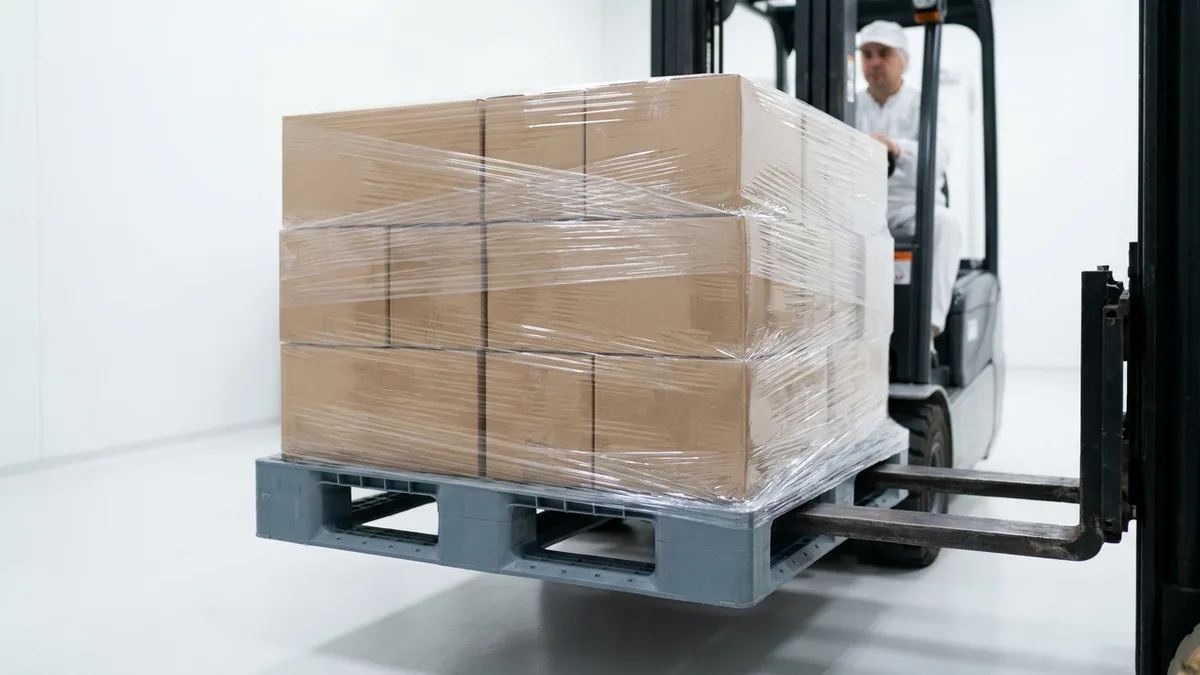
The operator
This case follows an Australian pharmaceutical exporter shipping validated cartons to Europe by air and sea in high volume. In pharma export, two costs bite repeatedly: the chargeable weight of every pallet position (especially by air), and the biosecurity treatment and paperwork attached to timber packaging crossing borders. This exporter wanted to attack both.
The problem with the old handling
Timber export pallets carry an ISPM-15 burden — they must be heat-treated, certified and are liable to re-inspection at destination, each step adding cost, lead time and the risk of a consignment being held or rejected at a strict European port. Timber is also relatively heavy, and on air freight every kilogram of pallet tare is a kilogram of saleable payload the exporter can't bill. Across a high-volume programme, both the treatment cost and the lost payload added up fast.
Why this product
They standardised on the BPB-1208 Light Weight Plastic Pallet: a very light nestable Euro (1200 × 800 mm) shipping pallet weighing just 6.25 kg, moulded from PE, rated to 2500 kg static and 1000 kg dynamic, on a 9-feet, 4-way base. The defining advantage is that, as a plastic pallet, it is exempt from ISPM-15 — no fumigation, no heat-treatment certificate, no quarantine hold on the timber grounds that had been catching their consignments. The ultralight 6.25 kg tare directly protects chargeable air-freight weight, and the nestable design keeps both warehouse footprint and any return-empty freight to a minimum.
This is a high-volume export consumable, reflected in its MOQ of 1656 — the exporter was buying at programme scale to feed a steady shipping cadence.
The load ratings are matched to the job rather than over-built. At 2500 kg static and 1000 kg dynamic, the pallet comfortably carries palletised pharmaceutical cartons — a relatively light, regular load — without the exporter paying in tare weight for capacity it will never use. That is the trade a light-weight export pallet is designed to make: just enough structure for the cargo, and not a gram more, so every kilogram saved on the pallet is a kilogram available to bill as freight. On a 1200 × 800 Euro deck destined for European racking, the footprint is also exactly what the receiving end expects.
How the rollout went
On the standard Euro footprint, the pallet matched the exporter's cartons, racking and the European receiving end without adjustment. The biggest operational change was a welcome subtraction: the heat-treatment and certification step simply dropped out of the despatch process for these pallets, removing a recurring task and a recurring delay.
The estimated result
Both target costs moved. Removing ISPM-15 treatment and inspection, we estimate, saved an estimated meaningful sum per pallet and shortened despatch lead time by up to a day — and, just as importantly, removed a recurring source of border hold-up on high-value cargo. The ultralight tare preserved more billable air-freight weight per position than a timber board would have allowed. Nesting kept the empties compact in the warehouse and on any return leg. These are estimates framed against the pallet's weight and ISPM-15-exempt status rather than a fixed price quote — but for a pharma exporter running volume into Europe, an ultralight treatment-free pallet pays back across the cumulative shipment count, not just on a single load.