
A Tasmanian seed-potato consolidator protected airfreight payload with an ultralight export pallet
A Tasmanian seed-potato consolidator air-freighting trial lots overseas.

Every kilo of pallet was a kilo of lost payload
A seed-potato consolidator in Tasmania air-freighted small trial lots of certified seed to overseas breeding and research customers. Airfreight is unforgiving on weight: you pay by chargeable mass, so every kilogram of pallet tare is a kilogram of seed you are not shipping for the same money. The consolidator had been sending these high-value consignments on timber pallets, which are heavy, eat into the chargeable payload, and — being timber — trigger ISPM-15 biosecurity treatment and the paperwork, cost and delay that come with it at the destination border. For small, valuable, time-sensitive trial lots, both the dead tare weight and the treatment hassle were out of proportion to the freight.
Why the very light nestable export pallet
The consolidator switched to the Light Weight Plastic Pallet (BPB-115), a very light nestable 1200x1000 mm export pallet with snap-on skids. The decisive number is its weight: at just 5.9 kg the pallet keeps tare to a minimum, so far more of the airfreight charge goes toward seed rather than pallet. It is rated 1200 kg static and 600 kg dynamic — modest figures, but entirely adequate for small trial lots, and the design is honest about being a light export unit rather than a heavy-duty deck. The snap-on skids give clean 4-way forklift entry so the pallets still handle properly on the dock, and because it is moulded HDPE rather than timber it is exempt from ISPM-15 heat treatment and fumigation, which removes the treatment cost and certification delay from the export leg entirely. The nestable form is the other half of the value: empties nest down tightly, so any pallets cycling back take minimal cube.
Rollout on the export lane
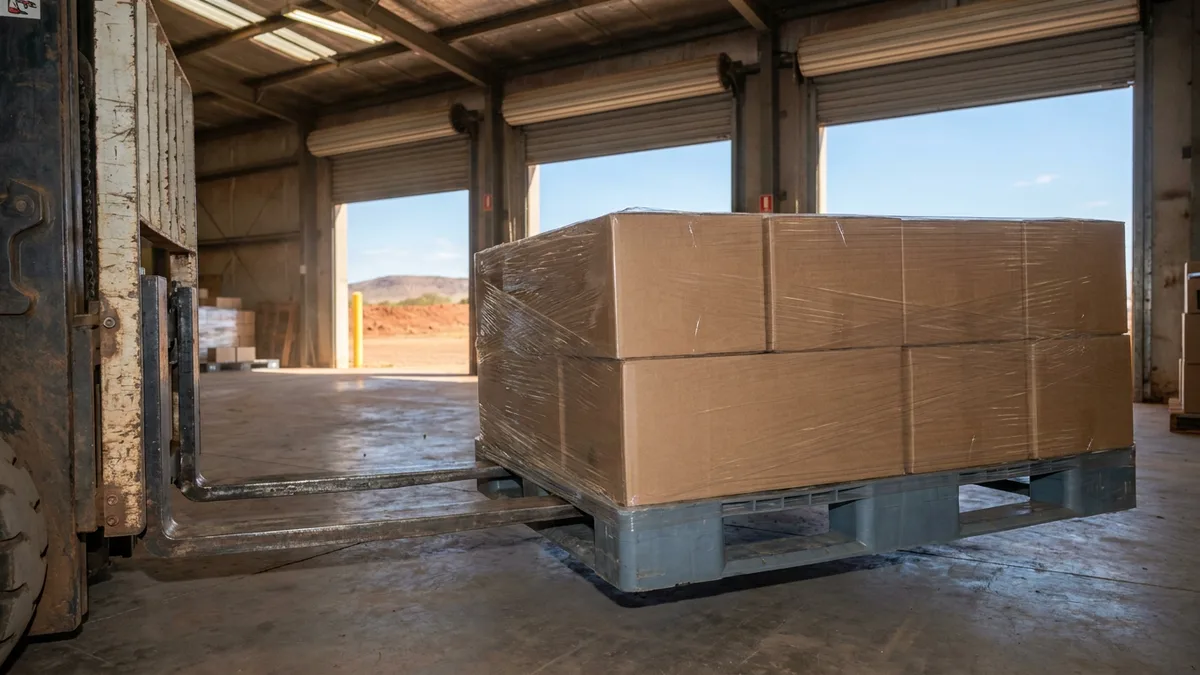
The consolidator put the light pallets onto its overseas trial-lot dispatches. Seed lots were palletised on the ultralight decks, which took forklift tines cleanly via the snap-on skids and cleared biosecurity as plastic units without the treatment step timber required. Where pallets came back, they nested for a compact return rather than riding home flat and bulky. The change was low-friction — same footprint, same handling, just far less tare and no fumigation paperwork.
The estimated result
On a weight-charged lane, the saving shows up as reclaimed payload. We estimate the low 5.9 kg tare protected an estimated 4–5% of chargeable airfreight payload per pallet position versus a timber board — payload the consolidator could now fill with saleable seed instead of pallet. Skipping ISPM-15 is estimated to have removed both the treatment cost and a day or so of certification lead time per consignment, which matters for time-sensitive trial lots. And nesting the empties is estimated to have kept return-leg cube well below what flat timber pallets would have taken. These are planning estimates rather than a guaranteed result, and the realised payload gain depends on the carton module, total consignment weight and carrier rating rules. But for high-value seed-potato lots going by air, an ultralight, treatment-free, nestable pallet attacks the exact cost — chargeable weight — that hurts most.