
How a Sunraysia dried-vine-fruit packer stopped bag-puncture claims and skipped ISPM-15 with a smooth-deck Asian export pallet
A Sunraysia (north-west Victoria) dried-vine-fruit packer exporting to Asia.

The operator
This is a dried-vine-fruit packer in the Sunraysia district of north-west Victoria, shipping sultanas, raisins and currants in bulk bags to wholesalers across Asia. Their product is high-value, bagged, and travels long distances by sea into markets with strict biosecurity at the port. They came to us with two recurring headaches that were eating margin: damage claims from bags being punctured on their pallets, and the cost and delay of treating timber pallets for export.
The problem with the old handling
They were shipping on timber pallets, and timber and bagged dried fruit are a bad combination. Splinters and protruding nail heads snagged and punctured the bags, and every punctured bag was a damage claim and a downgrade. On top of the product damage, timber pallets bound for export must be heat-treated or fumigated to ISPM-15 and certified, which is a cost line and a lead-time hit on every consignment — and a source of holds and rejections if a board is flagged at the destination port. The customer at the Asian end was also left to dispose of the inbound timber, which was a recurring complaint.
Why this product
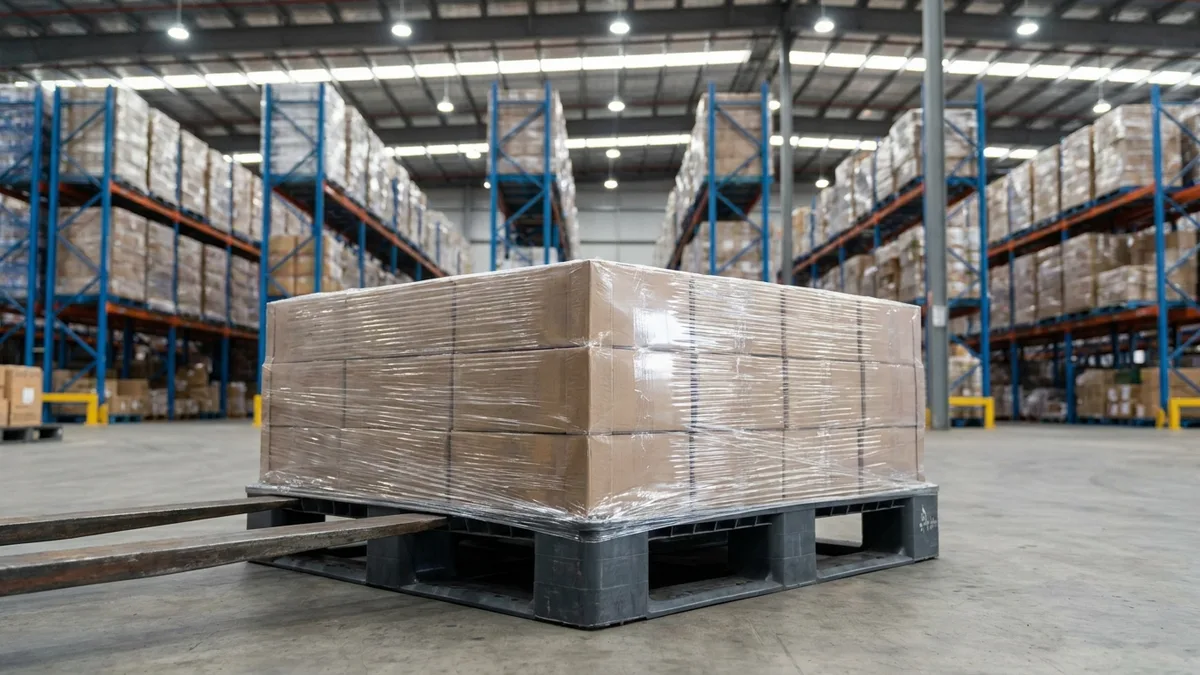
They switched to the Medium Duty Plastic Pallet (BPB-1111-3): a 1100 x 1100 mm Asian-export footprint, 9.3 kg, moulded from PE, rated to 2,500 kg static and 1,200 kg dynamic, on a three-skid base. Three properties made it the right pallet for bagged export to Asia. The smooth moulded deck has no splinters and no nail heads, so the bag-puncture mechanism simply disappears. The square 1100 x 1100 footprint is the Asian standard, so it drops straight onto the buyers' racking at the destination rather than forcing a re-palletise. And because it is plastic, it is exempt from ISPM-15 — no heat treatment, no fumigation, no certificate, no treatment-related holds at the port. As a one-way export pallet it sidesteps the whole timber-treatment regime, and the 1,200 kg dynamic rating comfortably carries a palletised load of bagged fruit.
The rollout
They moved their export lanes to the plastic pallet and the bag-snag claims stopped almost immediately — the smooth deck removed the thing that had been tearing bags. The square footprint meant the buyers' end handled the pallets cleanly on their own racking, and the disposal complaint went away. On the paperwork side, dropping ISPM-15 treatment from each consignment removed both a cost and a lead-time step from despatch. The MOQ of 344 suited a packer shipping export volumes who could field a proper one-way fleet.
The estimated result
We present these as estimates, framed as such, because claim rates and freight outcomes vary with product, route and buyer. On product damage, removing the splinter-and-nail puncture mechanism, we estimate, cut damage-related claims on bagged loads by an estimated 30-50%. On compliance, skipping ISPM-15 treatment removed a recurring cost line and a despatch lead-time step from every export consignment, and took out a recurring source of biosecurity holds at the destination port. And the inbound timber-disposal complaint at the Asian end stopped being the customer's problem. Taken together, we estimate the smooth-deck plastic pallet protected margin on a high-value bagged product while making the export leg cleaner and faster than timber ever allowed.