
How a regional food distributor got a known-spec square pallet at a used price by choosing a defined second-hand unit over a mixed bundle
A regional food distributor wanting predictable stacking on a budget.

The operator
This is a regional Australian food distributor that needed to expand its square-footprint pallet pool for stacked storage without a big capital outlay. The catch with buying used pallets is usually predictability: most second-hand pallets come as mixed-make bundles, where the spec varies unit to unit, which makes stack planning unreliable. This distributor wanted the cost advantage of buying used, but with a single known specification it could actually plan around — and a washable deck that would not fail hygiene checks the way their old timber did.
The problem with the old handling
Two problems sat side by side. First, their existing timber pallets were warping and failing hygiene checks in a food environment, getting pulled and condemned and driving avoidable downtime and replacement cost. Second, the obvious budget fix — a mixed-make used bundle — would have solved the cost but reintroduced uncertainty: with varying decks and ratings across the bundle, stack heights and load planning become guesswork, which is no good for a distributor stacking product reliably day in, day out.
Why this product
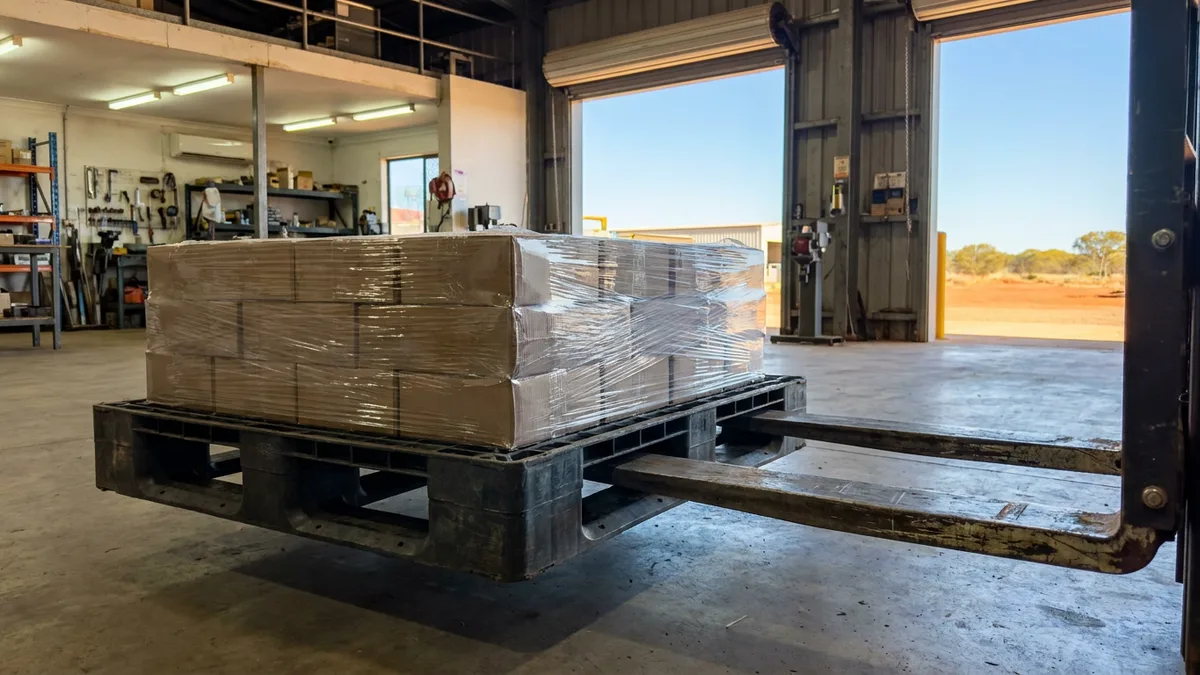
They chose the Medium Duty Used Plastic Pallet (BPB-110UMS): a defined second-hand 1100 x 1100 mm square export pallet, 20.5 kg, in PP/HDPE, with a known 5,000 kg static and 1,250 kg dynamic rating on a full-perimeter base. The point of difference is that this is a defined-spec used pallet, not a random bundle. Because every unit carries the same known 5,000 kg static rating, stack planning stays reliable — the distributor can plan load heights with confidence, exactly as they would with a new fleet, but at a reconditioned price. The full-perimeter base gives stable, even stacking, and the washable plastic deck replaces the warping timber that had been failing hygiene checks. The modest MOQ of 32 suited a targeted pool expansion.
The rollout
They brought the used pallets into the stacked-storage operation as a defined, predictable addition to the pool. Because the spec was known and consistent, the crew planned stack heights against the 5,000 kg static rating without the guesswork a mixed bundle forces, and the full-perimeter base stacked evenly. The washable PP/HDPE decks came through the food environment without warping, so the hygiene-rejection problem that plagued the timber went away — all at a fraction of new-pallet cost.
The estimated result
We frame this as an estimate because used-versus-new pricing and timber-failure rates vary. On cost, buying this defined-spec used pallet rather than a new equivalent, we estimate, saved an estimated 40-50% of the capital outlay — the core benefit of going second-hand. Crucially, because it is a known specification rather than a mixed bundle, that saving came without sacrificing predictable stacking: load planning against the consistent 5,000 kg static rating stayed reliable. And the washable plastic deck replaced warping timber that had been failing hygiene checks, cutting the rejected-pallet downtime in the food environment. We estimate the combination delivered both a lower capital cost and steadier operations than either new pallets (more expensive) or a mixed used bundle (less predictable) would have given.