
A WA mine-camp supplier picks a known-spec used stackable square pallet for one-way camp runs
A Western Australian mine-camp supplier.

The operator
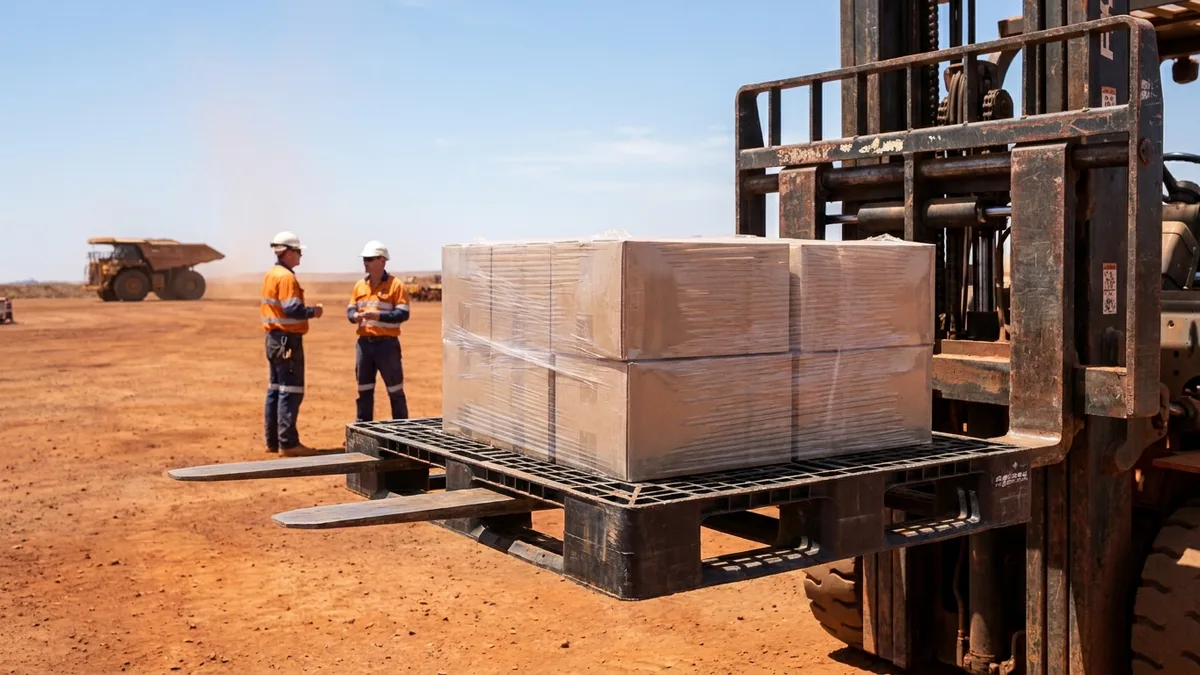
This case follows a supplier servicing remote mine camps in Western Australia — the kind of operation that trucks consumables out to camp on a regular run where the pallets, more often than not, don't come back. When stock goes one-way to a remote site, you don't want to send expensive new pallets, but you do want a known, reliable specification rather than a gamble.
The problem with the old handling
For one-way consumable runs to camp, new pallets are hard to justify economically — they leave the depot and effectively don't return. But the cheap alternatives carried their own problems. One-trip timber splintered, became a manual-handling complaint for the crews unloading at camp, and was inconsistent. Buying unspecified mixed-make used bundles, meanwhile, made stack planning unreliable because you never knew exactly what you were getting. The supplier wanted a defined, repeatable spec at a used price point.
Why this product
They chose the BPB-110ULS Light Weight Used Plastic Pallet: a second-hand but defined-spec stackable 1100 × 1100 mm export pallet weighing 6.8 kg, in a PP/HDPE construction, rated to 1600 kg static and 800 kg dynamic, on a full-perimeter base. The key was that this is a known specification offered used — better than the unpredictable mixed-make bundles, because the supplier could plan stacking and handling around consistent figures. The square 1100 footprint suited the loads, the full-perimeter base gave stable support, and being plastic the pallet avoided the splintering that had made one-trip timber a safety complaint on the camp run.
Buying used was the deliberate cost lever here, and a low MOQ of 32 suited a supplier topping up a one-way pool rather than committing to a large new-pallet fleet.
The spec fits the lightweight one-way brief precisely. At 6.8 kg the pallet is easy for crews to handle manually at both ends of the run, and the 1600 kg static and 800 kg dynamic ratings are well matched to the bagged and boxed consumables that move out to camp — enough capacity for the load without the weight and cost of a heavy-duty deck that would only be thrown one way. The full-perimeter base spreads support evenly under those loads, and the 1100 × 1100 square footprint is the standard the supplier's other handling is already built around, so a used unit slots in without becoming an odd size in the pool.
How the rollout went
On the standard square export footprint, the pallets integrated with the supplier's depot handling and loading without change. Because the spec was defined rather than mixed, the despatch team could load and stack predictably, and the crews at camp received a clean plastic deck instead of splintered timber.
The estimated result
The economics favour used for a one-way job. Buying this defined-spec pallet second-hand rather than new, we estimate, cut the pallet cost by an estimated 40–50% — the right call for stock that isn't coming back. At the same time, because it is a durable plastic pallet, it outlasted the one-trip timber it replaced on the run to camp, and being plastic it sidesteps ISPM-15 treatment on any export movement, unlike the timber pallets in the general pool. The known specification kept stack planning reliable, which the mixed used bundles never did. These are planning estimates based on used-versus-new pricing and the pallet's construction rather than a quoted price — but for a remote-camp supplier, a defined-spec used plastic pallet hits the sweet spot between cost and predictability on one-way freight.